The Pastel Society was founded in 1898, and the first exhibition was held in the Royal Institute in Piccadilly. Founder members and early exhibitors included Brangwyn, Degas, Rodin, Rothenstein, Whistler and G.F. Watts.
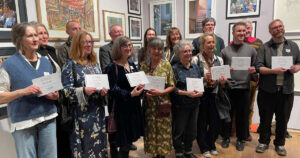
Being elected a member of The Pastel Society has been a long held dream and the result of a lot of hard work over several years. It is a huge honour and I am very excited for what lies ahead. Here, I am sharing the thoughts and stories behind the 13 works which have been accepted for The Pastel Society annual exhibition between 2020-2025.
For me, the technical execution of a pastel work is very much dependent upon the ideas and stories behind it. I see Still Life as a very physical subject. When teaching young children to draw for example, I often use fruit and tell them to pick it up, feel it, throw it gently from hand to hand – feel the weight of it, before beginning to draw it. All of these things are important. Each object has a surface, a density, a texture. We see with our eyes but also gain information from touch, smell and taste. Considering how these things can be incorporated into an artwork is endlessly fascinating and always challenging.
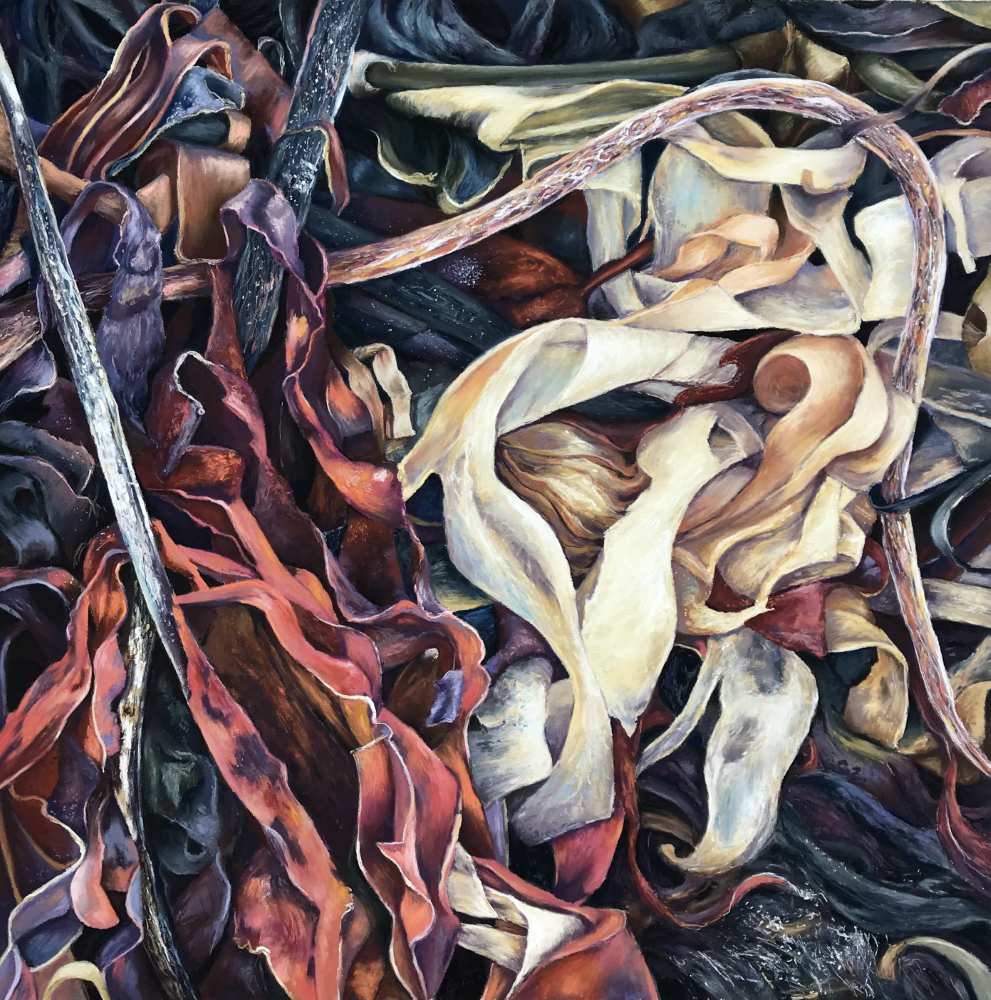
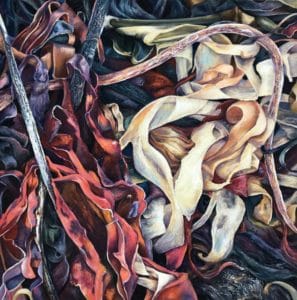
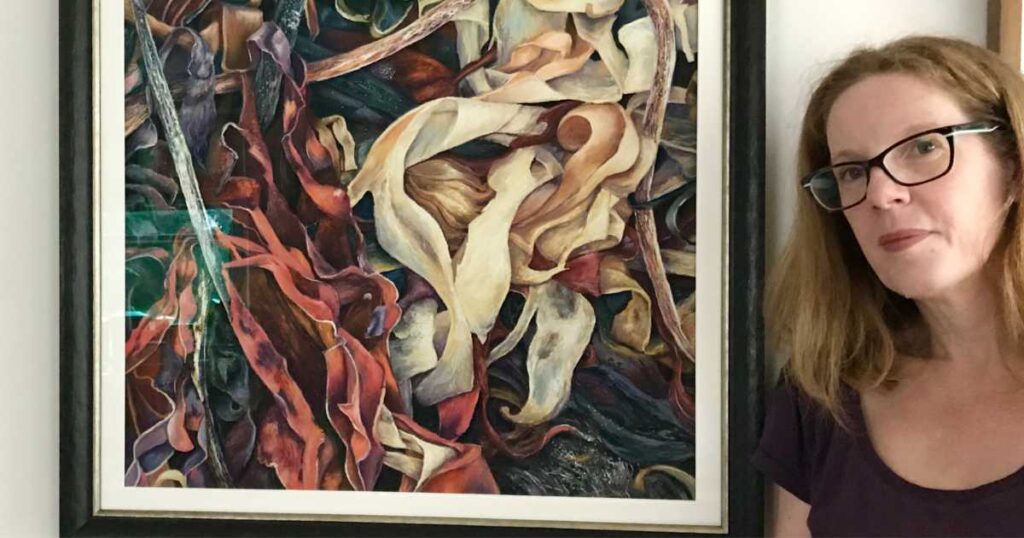
I started painting seaweed a few years ago after taking photos and sketching along the rocky beaches of Northumberland and Scotland. Winter storms had washed up masses of it – strewn along the shore in ribbons and twists of deepening colour. I am interested in presenting subjects that may be overlooked or unrecognised and I think this is probably why I got so engrossed at examining the seaweed.
The painting is pretty big (65cm square unframed), took just under a month to complete and took over my life during that time. I would spend hours on end, gradually making it grow and emerge. Often I would paint in my running gear, so I could take a break and go and run a few miles to release the tension, but I still succumbed to migraine at times, that would eat up days, brought on by concentration and stress. Once finished, I could barely look at it. I covered it up and put the easel in a corner for a week.
Paintings are like children (and as a mother of two amazing children, I do not say this lightly) and the relationship between parent and child can be a complex one. Some are an absolute joy, they almost create themselves; they fly across the paper and land in a glory of delight. Others are a real struggle. They fight back, they argue, they make you question your own sanity and reason. Such battles can be drawn out and can leave you mentally and emotionally drained. By the time I had finished with ‘Fire of The Deep’ I was exhausted and wanted my life back. The only thing to do was enter it for The Pastel Society exhibition in London and hope that perhaps somebody might see in this painting, what I had seen on that beach. Not only was ‘Fire of The Deep’ accepted for the exhibition, I was delighted and honoured to receive the 2020 Royal Talens / Rembrandt Award.
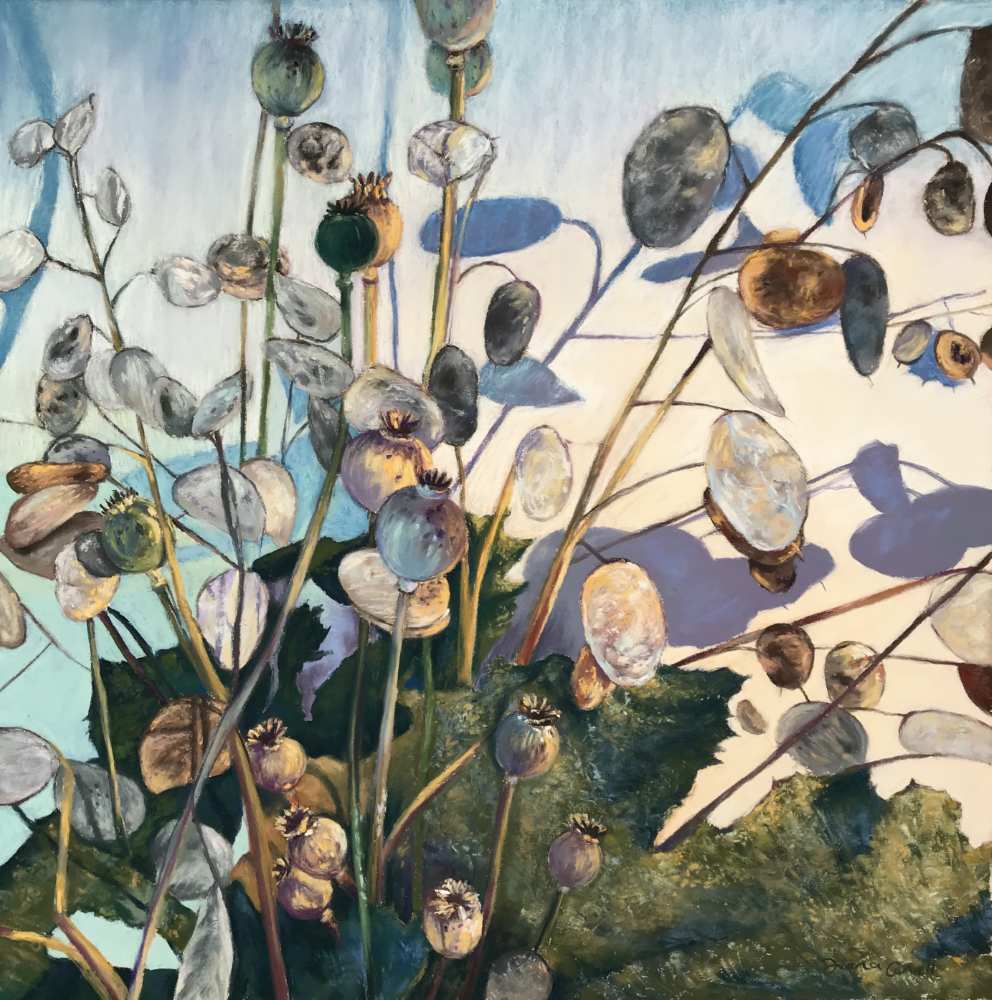
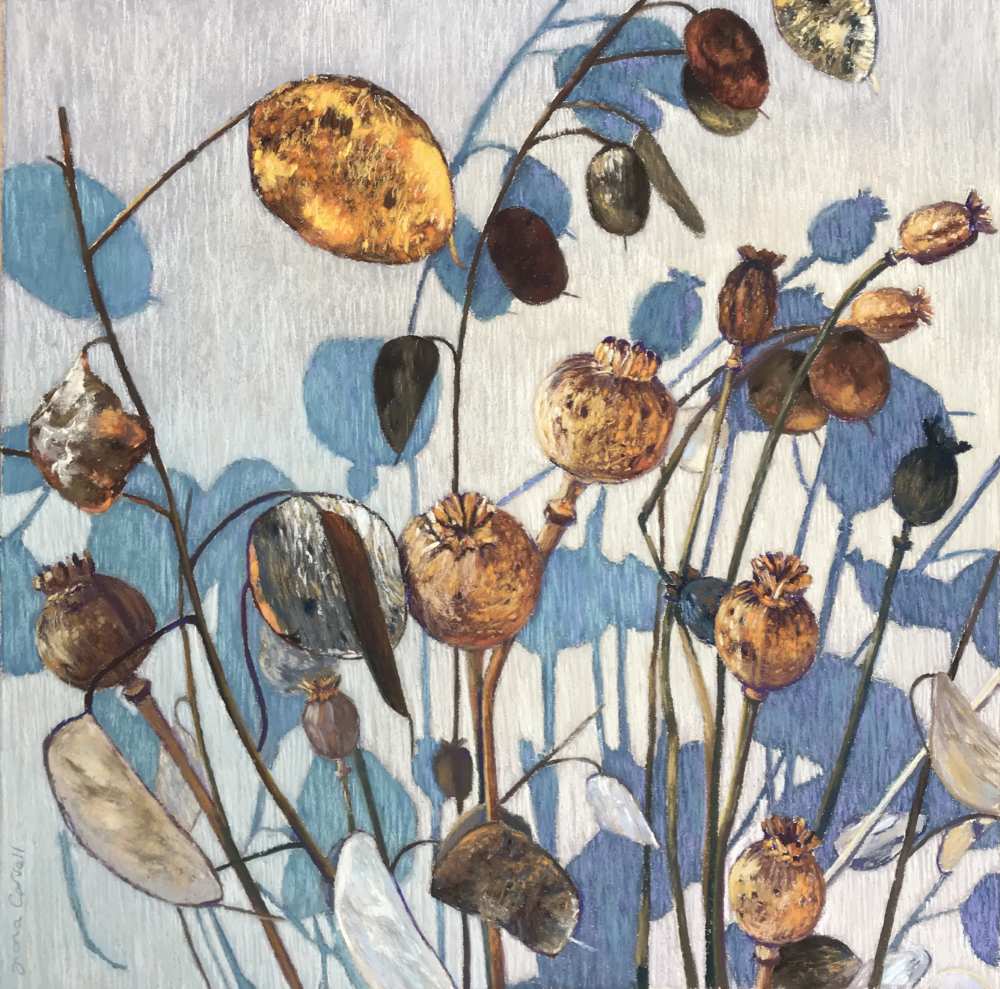
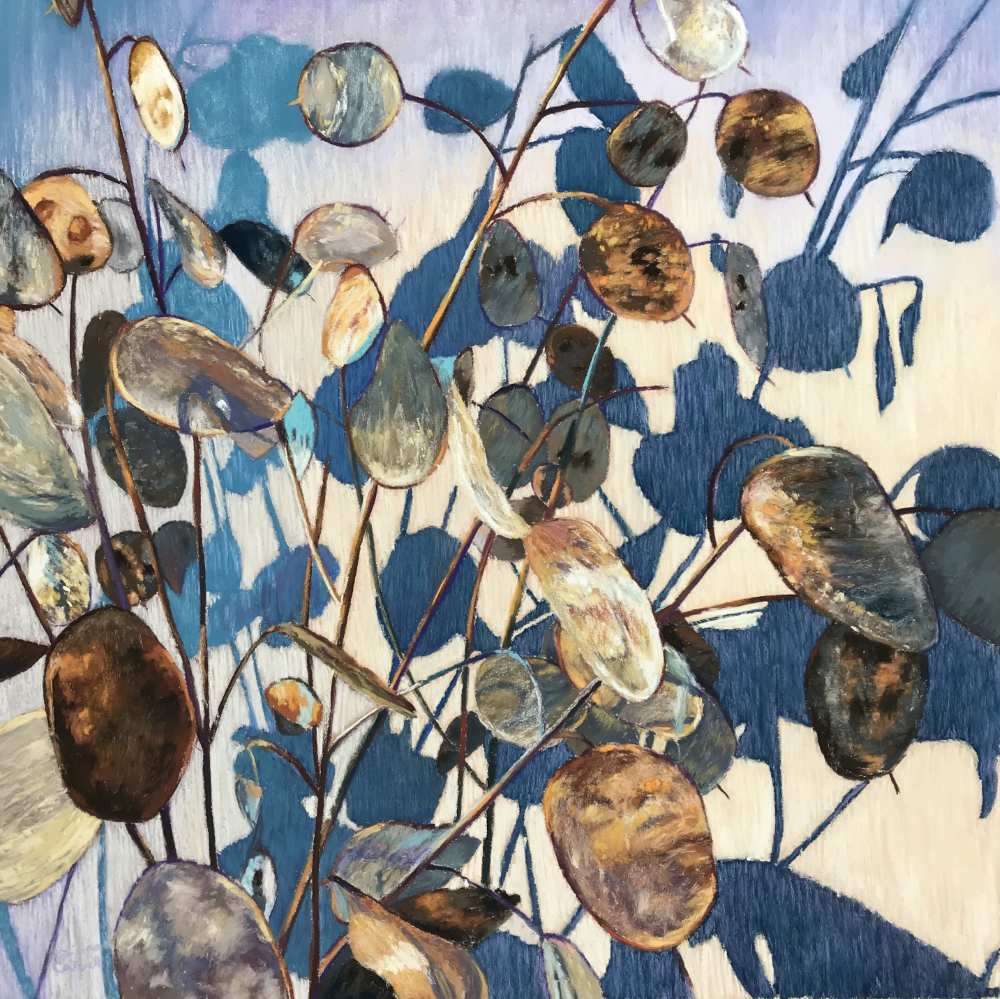
Inspiration for me often comes from the natural world and discoveries when out walking or running. I spotted the light shining on some Honesty seeds whilst out running one day by the roadside, and was immediately transported back 30 years to my Mother’s house. She always had a vase of these pretty seeds and the associations of warmth and childhood saw me return later with a pair of scissors to snip a few bunches and bring them home to arrange in a vase, as my Mother did. It was not long before I decided to light them and explore their beautiful textures with pastel. The depiction of light is of course, an essential element to any artwork. Having worked in broadcasting, my approach to lighting still life has be learnt from working with Lighting Directors, (for which I will be forever grateful!) and although I may not have a huge studio or cinematic lighting kit, the principles and technical basics remain the same whilst using a simple spotlight.
The shadows I created became an integral part of the composition, carefully considered and rendered with delicate layers of pastel to build up subtle tones and nuances of shade. The process of creating ‘Finding Honesty’, was very different from ‘Fire of The Deep’, in which I used a great deal of careful blending to produce a sheen to the seaweed. The Honesty paintings have barely any blending, the emphasis being on texture and shape. The background rendering was as complex as the composition, with a considered use of line to separate the seeds from the wall, which helped to create a sense of space. Different elements of a picture have different physical qualities and so I try to communicate this with my drawing, using a variety of marks, direction, pressure as well as colour selection.
I initially painted four Honesty paintings, three of which were exhibited with the Pastel Society in 2021. The UK was living with the uncertainties of the Covid pandemic and the Pastel Society exhibition that year was initially online as galleries were closed for a time. ’Shadows of Honesty’ was selected and sold online before I had news that a physical exhibition would take place, later in the year. I had a month to submit additional work for this and submitted ‘Silver & Gold’ and ‘Suspended Animation’, both of which were accepted. The fourth, ‘Finding Honesty’, was accepted later that year for my first Pastel Society of America exhibition and my first international award.
Besides being totally elated from receiving recognition for my efforts, the Honesty series was an important turning point in my work; I had found my artistic ‘voice’, that is to say, I had found a way of working that I felt represented myself with the potential for growth and that, as an Artist, is an exciting thing.
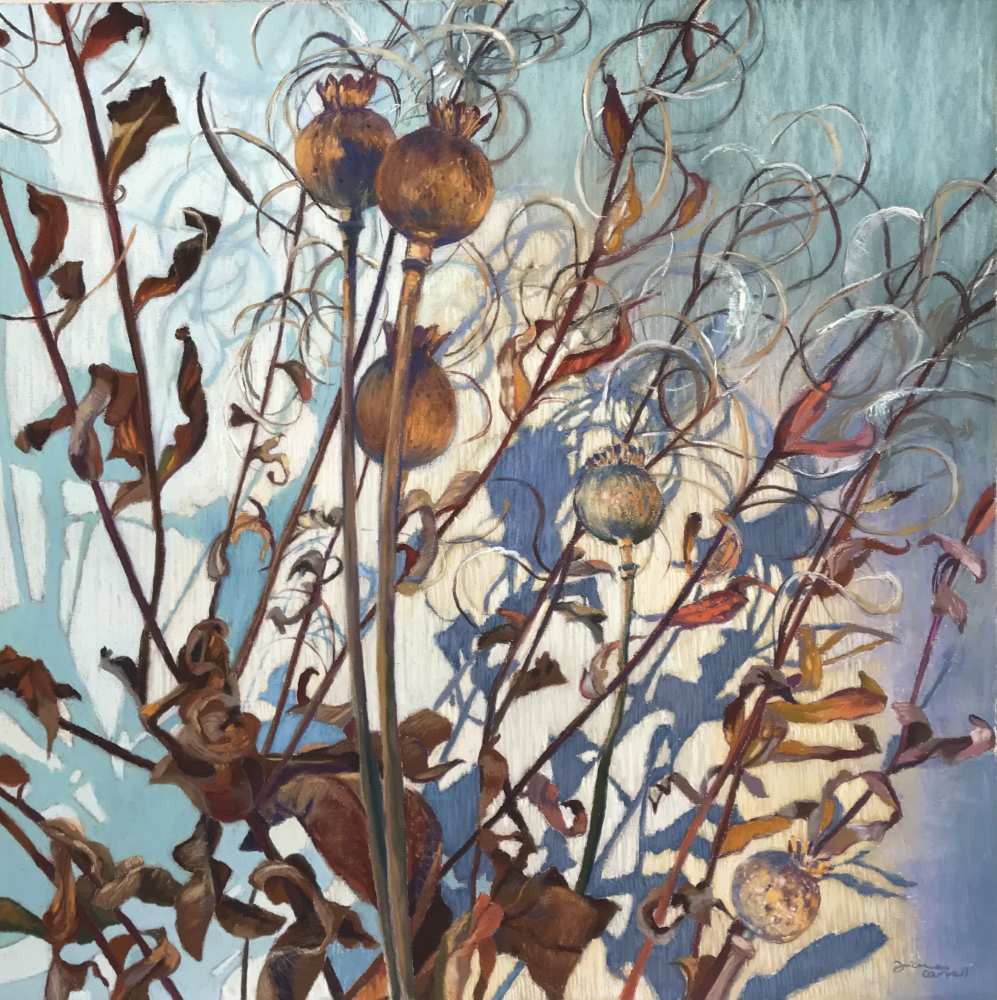
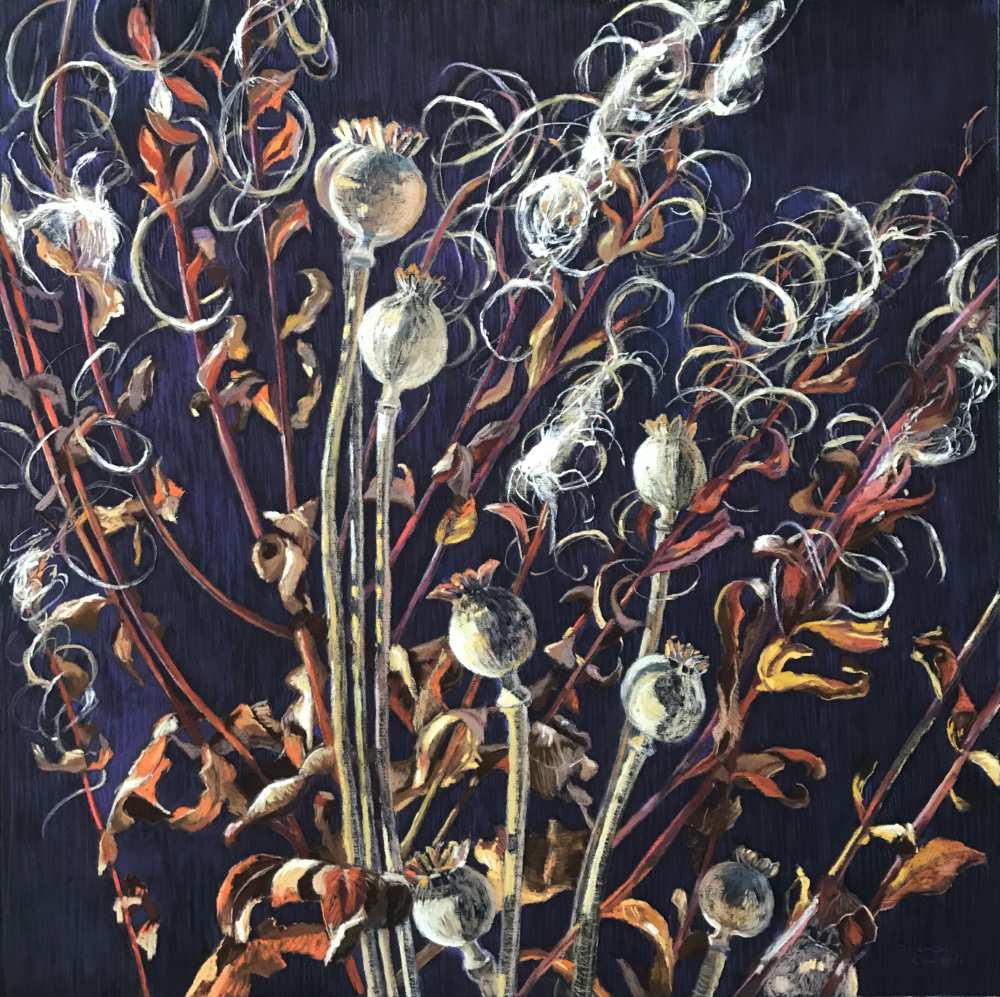
‘Wild Opulence’ and ‘Wild Abandon’, were my Pastel Society UK exhibits for 2022 and followed on from my Honesty series. There were similarities in the physical qualities and technical aspects as well as differences and new challenges. I enjoyed presenting Rosebay Willowherb (widely regarded as a weed) as something spectacular. At just under 50cm square, these two pieces needed space because there’s a lot going on. I painted them as a pair, to be viewed together, related but different, each with it’s own mood. They were created with a combination of my usual Unison Colour pastels plus Caran d’Ache pastel pencils for the very fine details. Again, lighting was very important for setting these up and I worked both from life and photographs for these pieces as they wilted pretty quickly!
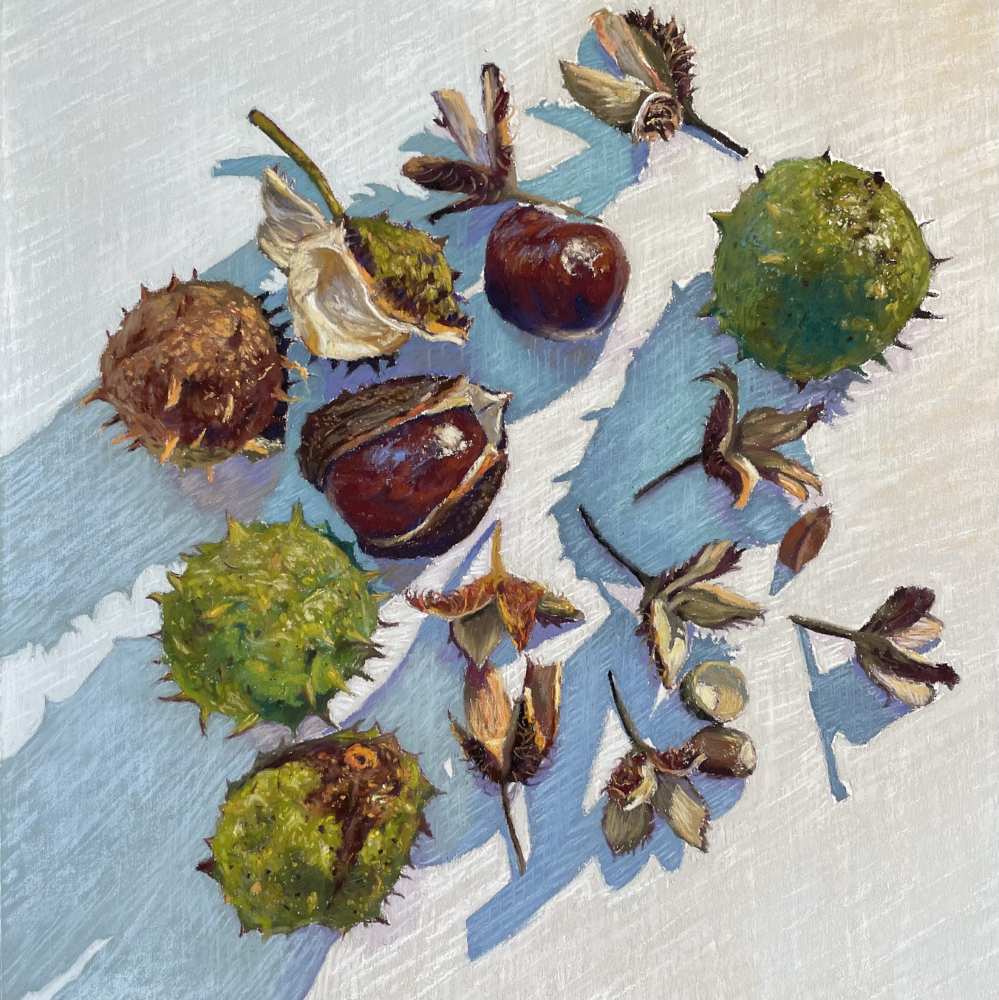
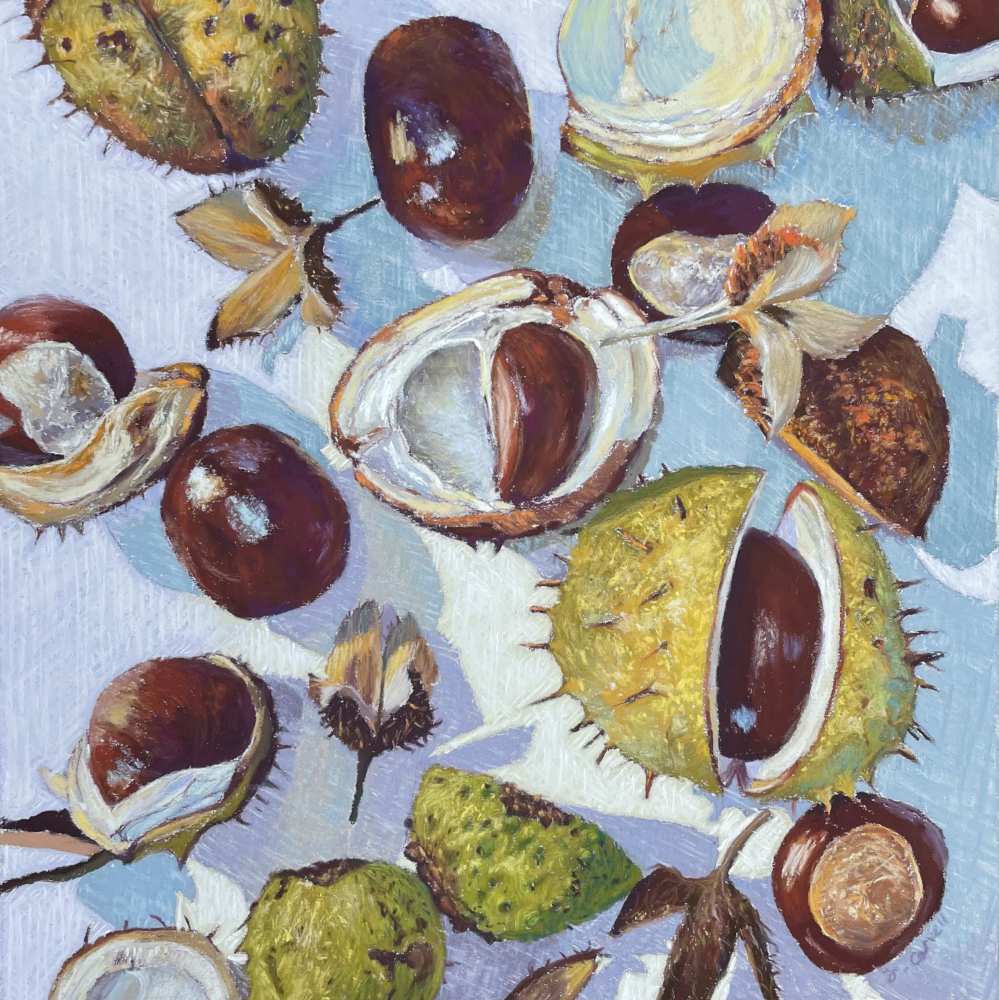
Looking back, I can now see that ‘Fallen’ and ‘Wonder’ were the forerunners of what would later become my Found series. They are both very much about examining small objects at close quarters and presenting the familiar with fresh eyes.
‘Wonder’ is very much about the wonder of Nature and specifically the excitement of a horse chestnut shell, opening up and revealing its content. I would marvel at this spectacle as a child and still find it fascinating. Added to this, the knowledge that, something so tiny, can grow to become a huge, splendid tree, is incredible really. Drawn from life, I wanted to emphasise the textural differences within the composition with considered mark making and pastel application.
I was awarded The Artist Magazine Award for this piece, which meant I had a feature article on my work, some months later.
‘Fallen’ followed in a similar vein. I have always loved the feeling of a warm, shiny conker in my pocket; it has a unique texture. I used set lighting alongside natural light to create shadows which seem to fall away, echoing the movement of the seeds as they dropped.
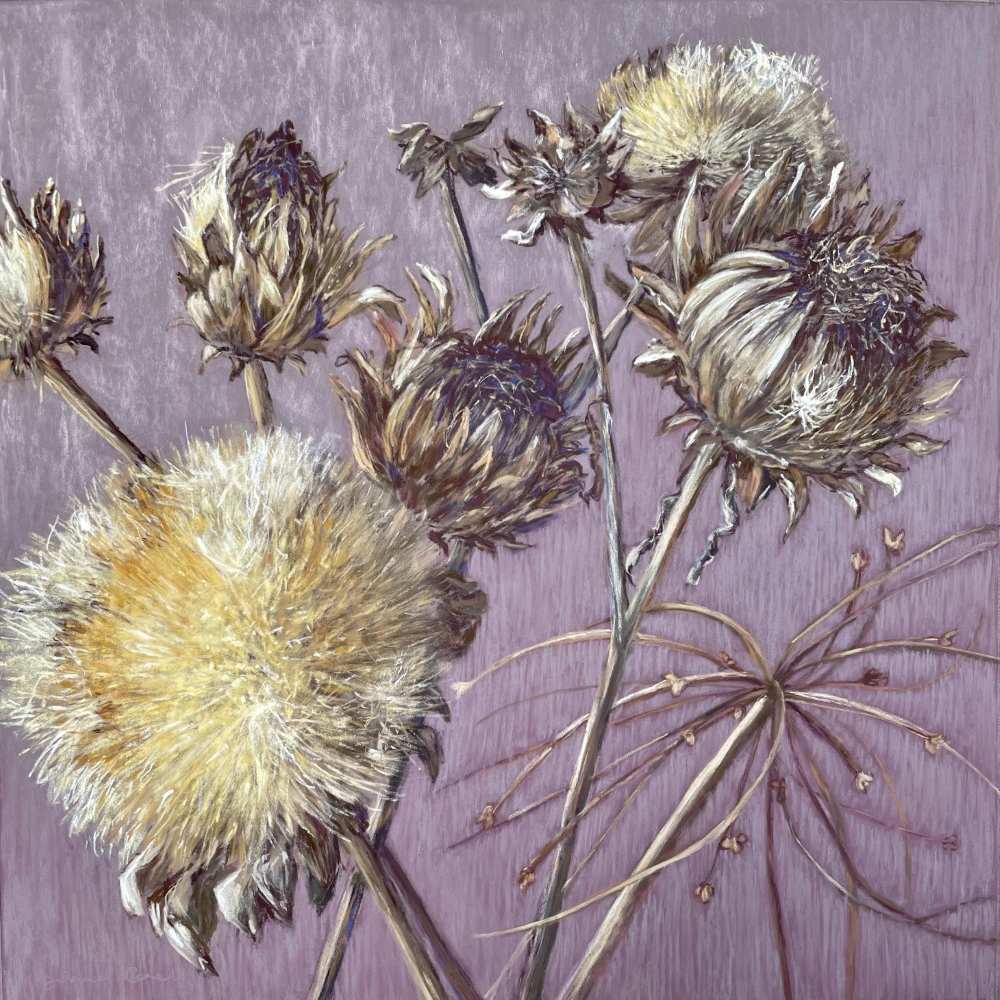
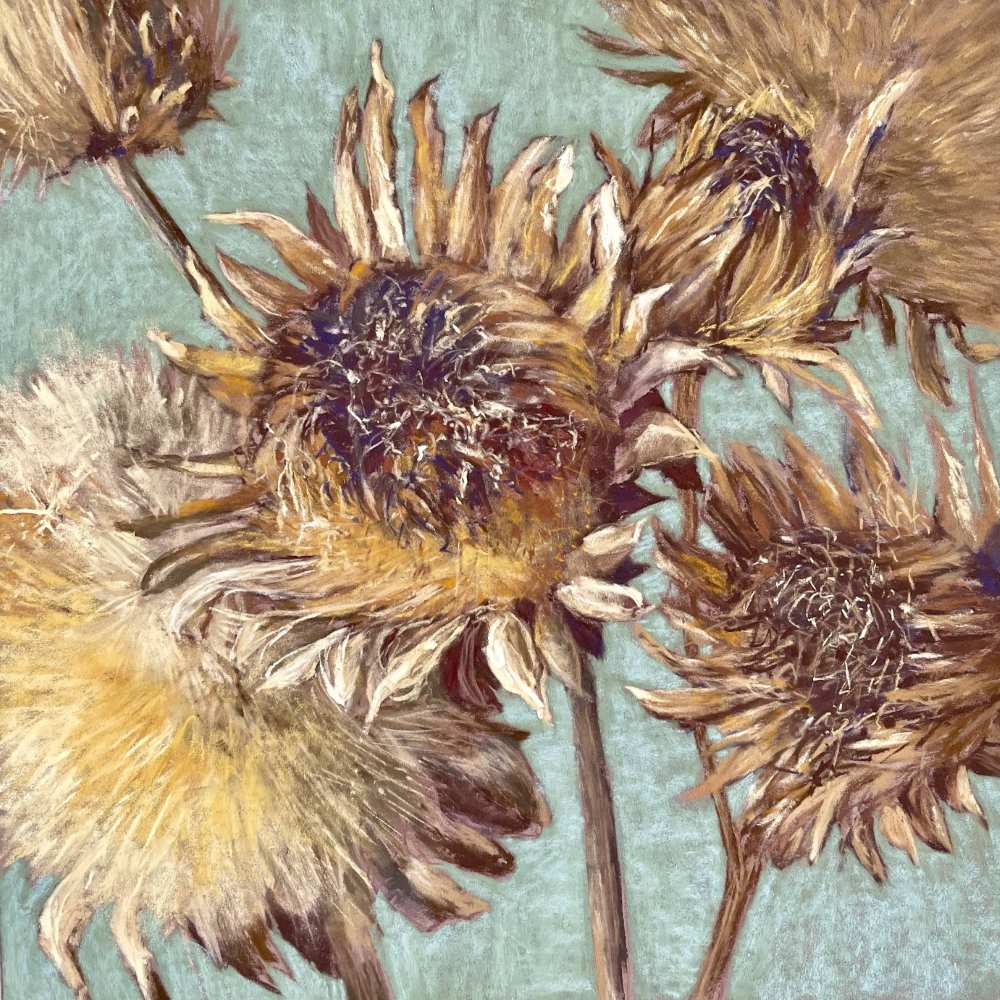
My Cardoon series of pastel pieces are an attempt to capture strength, structure, fragility and softness. I was struck by the extreme differences in textural qualities, which proved to be both challenging and endlessly engaging to draw.
Having previously depicted several different plants and seed heads, the Cardoons carried on the theme of a life cycle. I am interested in what happens to a plant after all the flowering has gone. There is beauty and hope in the end of life with the promise of new life to come.
My Cardoon obsession began with a visit to my local National Trust garden, where I saw a clump of Cardoons which had been left to go to seed. They are very tall plants (around 5ft) and not something that could be easily popped into my pocket, so I made enquiries to the head Gardener, who kindly cut a few for me to take home.
I got some very strange looks from people as I triumphantly walked out of the gardens with a bunch of dead flowers and a huge grin on my face. I was so happy!
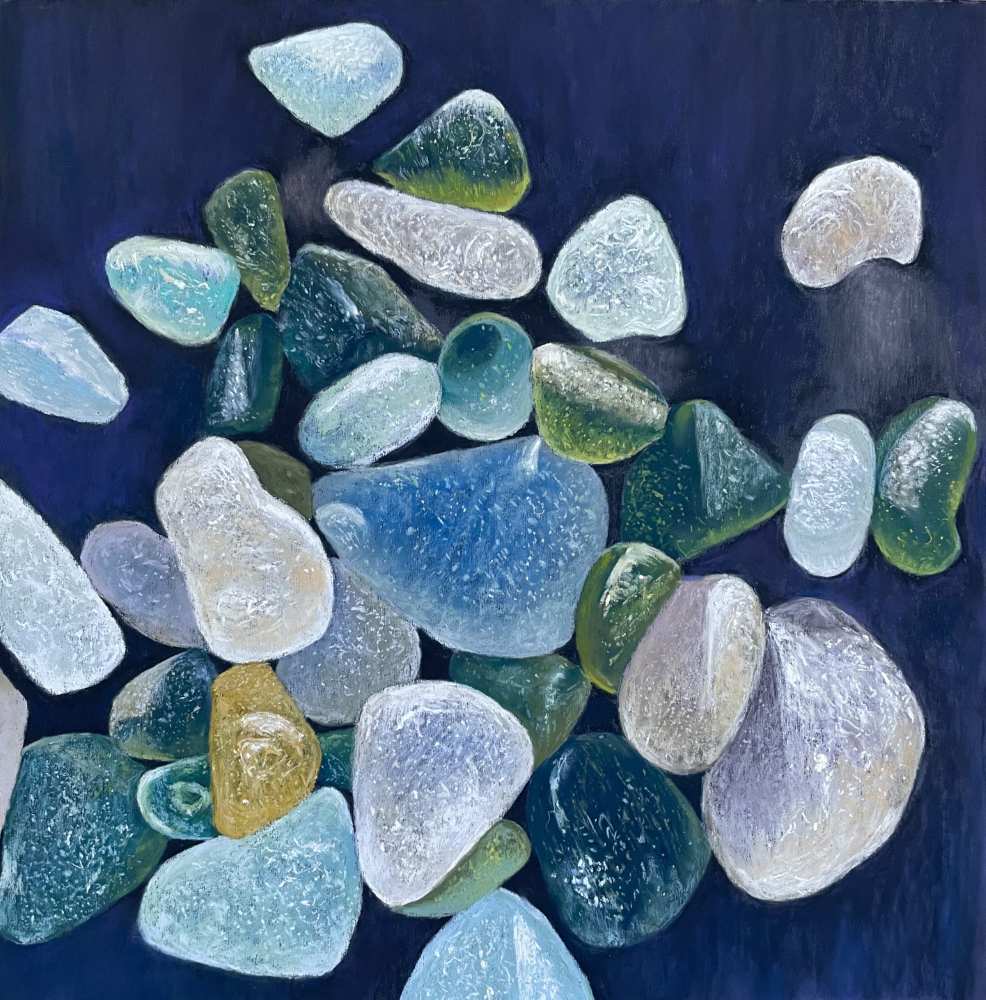
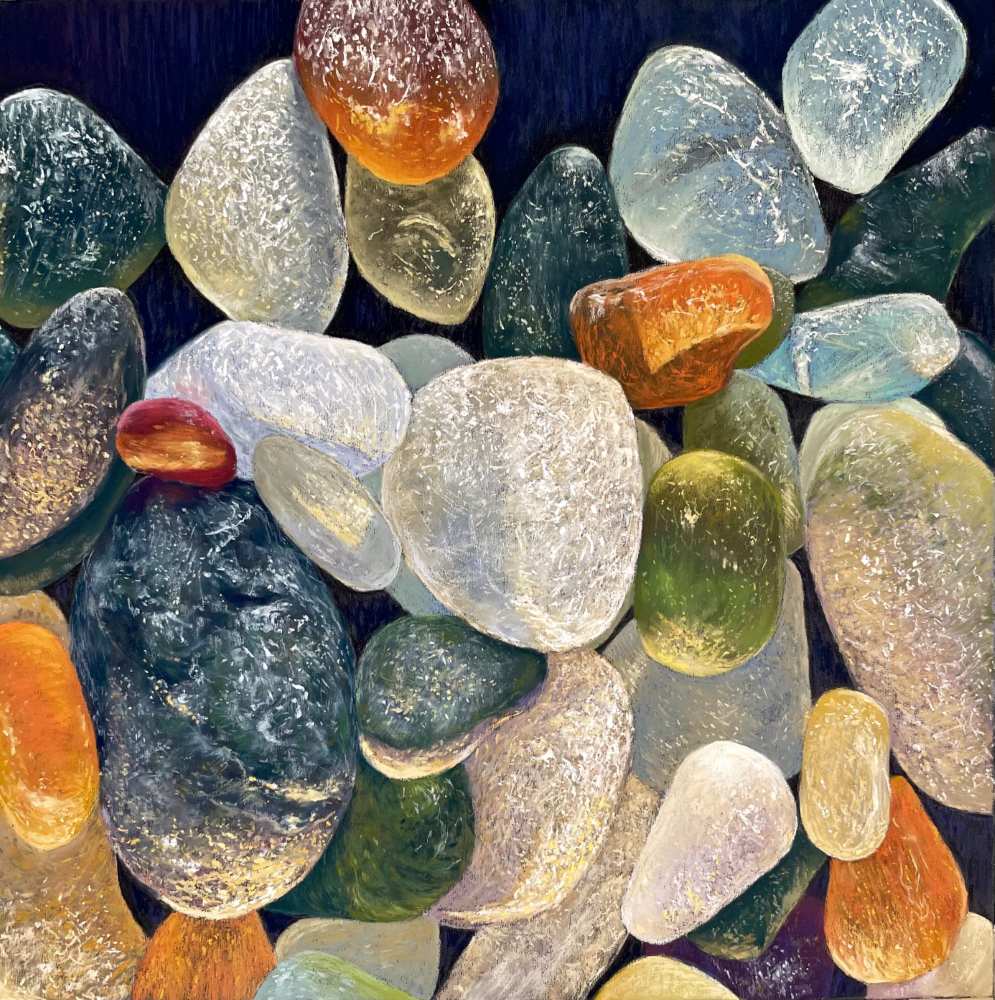
The compulsion to collect things is a very human trait and sometimes has no conscious reason other than a fascination with colour, texture and form.
Collecting sea glass is a popular pastime on the North East coast and something I have done many times throughout my life.
Glass factories were located at Seaham and Sunderland during the Victorian and Edwardian eras. Producing millions of bottles and glassware, waste glass was dumped directly into the sea and has been washed up ever since. It is widely collected today by locals and visitors alike, searching for tiny fragments that are now worn and shaped by the sea.
I enlisted my husband to help my search and between us we managed to gather what I hoped would be interesting examples. Looking at them in detail revealed a tiny universe within each piece – so much colour, texture and light. I find it incredible that some of these glass shards will be over 100 years old and started life as something else entirely. Now devoid of practical purpose, they remain colourful treasures to find on the beach.
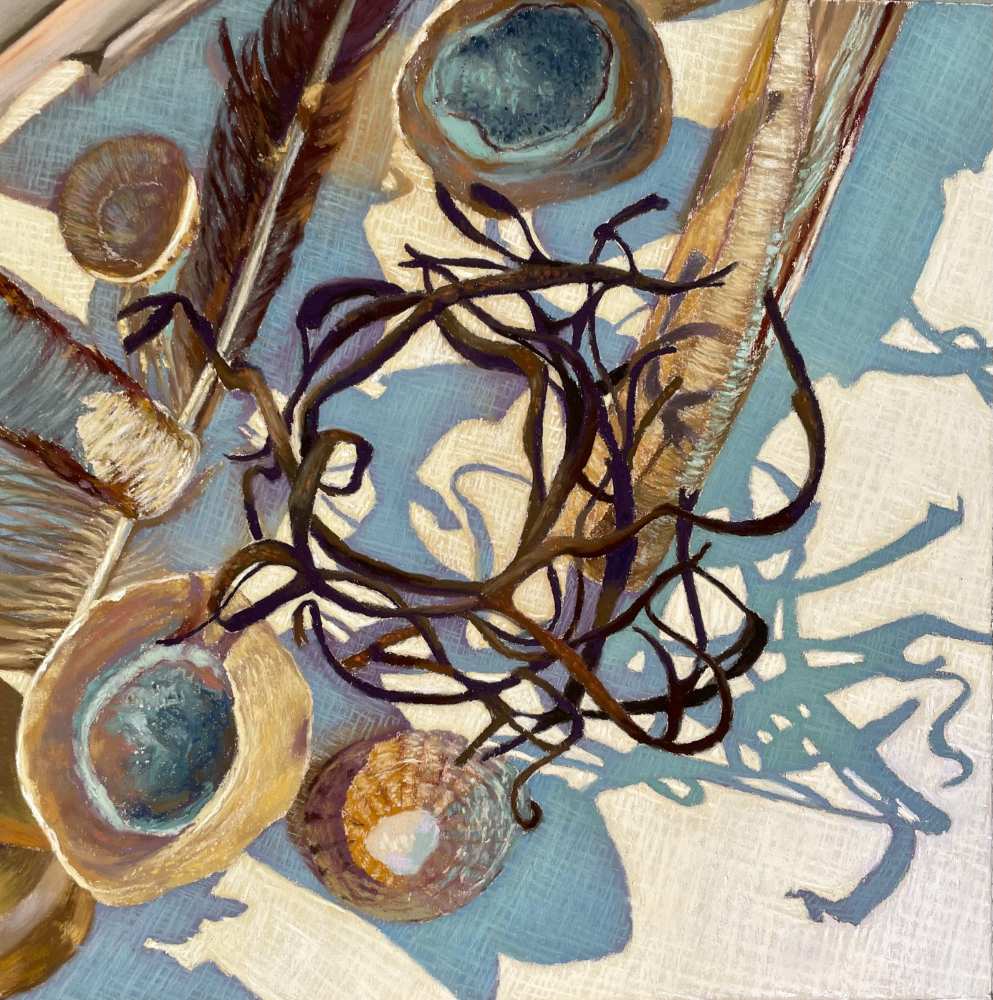
‘Found Beachcombing’ continues the theme of found objects connected to the sea.
I often gather shells, feathers and fragments of seaweed whilst on beach walks. I selected these pieces because of the variety of textures and shapes. I have painted seaweed many times but it is very different in a dried, hardened state, becoming almost sculptural. The shadows created from this throw an element of movement into an otherwise very still composition and made me think of how seaweed changes state when it comes into contact with water.
What my next obsession will be, I have no idea. I do know however, that whatever the object / subject or idea, I have to feel a connection and excitement to it, in order to be true to myself. I am constantly striving to capture on paper what I feel both emotionally and physically. I usually attempt to paint and draw things which I think I cannot.
To those that strive to develop their work and perhaps enter an open exhibition – dig deep, find out what moves you and let this direct your creativity.
Thank you for reading.
Fiona Carvell PS PSA