
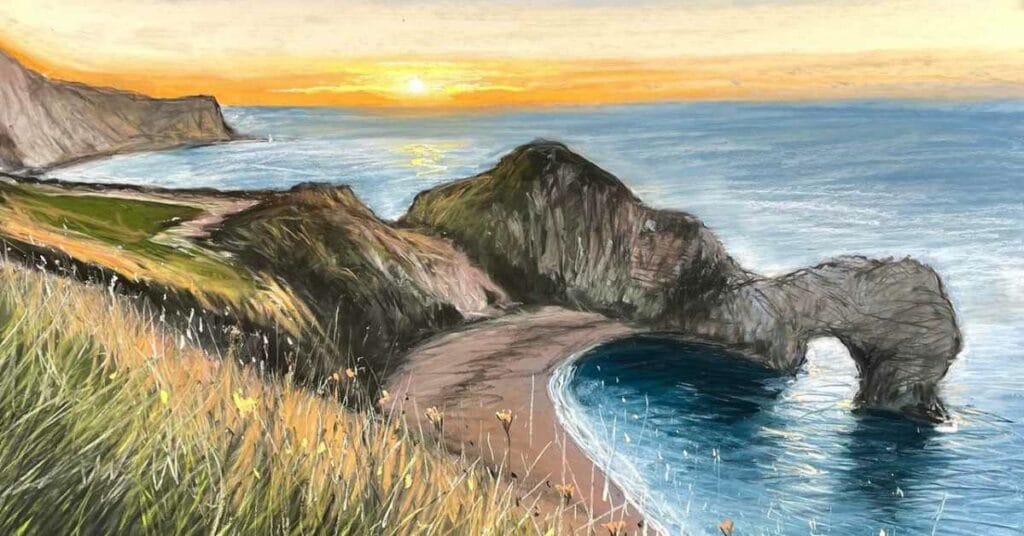

We’re delighted to announce the next 5 Day Pastel Challenge, starting Monday 7th February.
Associate Artist Nina Squire, returns to host her second challenge where she will challenge you to paint the beautiful and well known Dorset scene – Durdle Door.
You will recreate it with different techniques using soft pastels, both dry and with liquid.
Painting the rocky headland you will explore mark making and learn how to layer the pastel in the sparkling seas, and create depth, contrast and interest with the foreground foliage.
With Nina’s daily videos and worksheets you’ll be lead from the initial drawing right through to final finishing touches.
For all the info, and your chance to sign up, head to the link below.

This 5 Day Challenge has now ended
Nina has also written a follow up blog to our ‘behind the scenes’ look at the 5 Day Pastel Challenge. Nina writes about her experience during her first challenge, and also offers loads of useful info and tips to help you get started in pastels, and prepare for one of her challenges or workshops.


3 comments
Ann Perrin
Sorry but registered and now not sure what I do tomorrow? Do I go into the Facebook site at 9 am and you are there? Or what button do I press to join. Thankyou Ann
Oliver
Hi Ann, I see you found the group. Just look out for our daily videos, which are posted at 6am each morning. Nina’s Live Q&As are at 7pm. You’ll soon get the hang of it. Enjoy the challenge. ❤️
Yvonne Thomas
I’d love to do this