
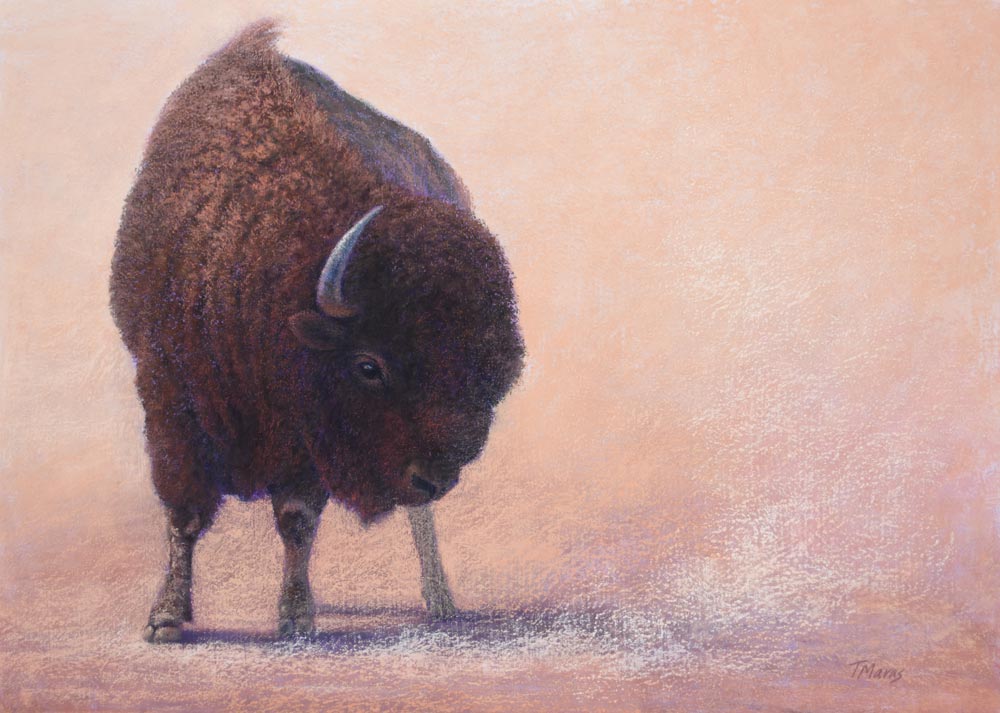
Do you work from photos or from life? This is not an either/or question. There are pros and cons to either approach and I prefer the best of both worlds. While I may use photos for inspiration, there are many benefits that can be derived from the use of exploratory sketches en plein air.
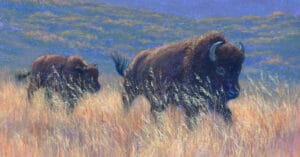
“Dust” was inspired by a drive-thru (or park but stay in your vehicle) animal sanctuary. The bison herd lounged in the heat of midday, ate from nearby grasses, walked about with youngsters following closely behind and large bulls kicked up clouds of dust. I spent about ½ hour taking photos and making sketches of a herd of bison.
With the harsh overhead lighting, I knew the camera would wash out the light colors and I would lose details in the shadows.

So I made sure to capture color notes along with the sketches of anatomical details and movement.
Click to enlarge
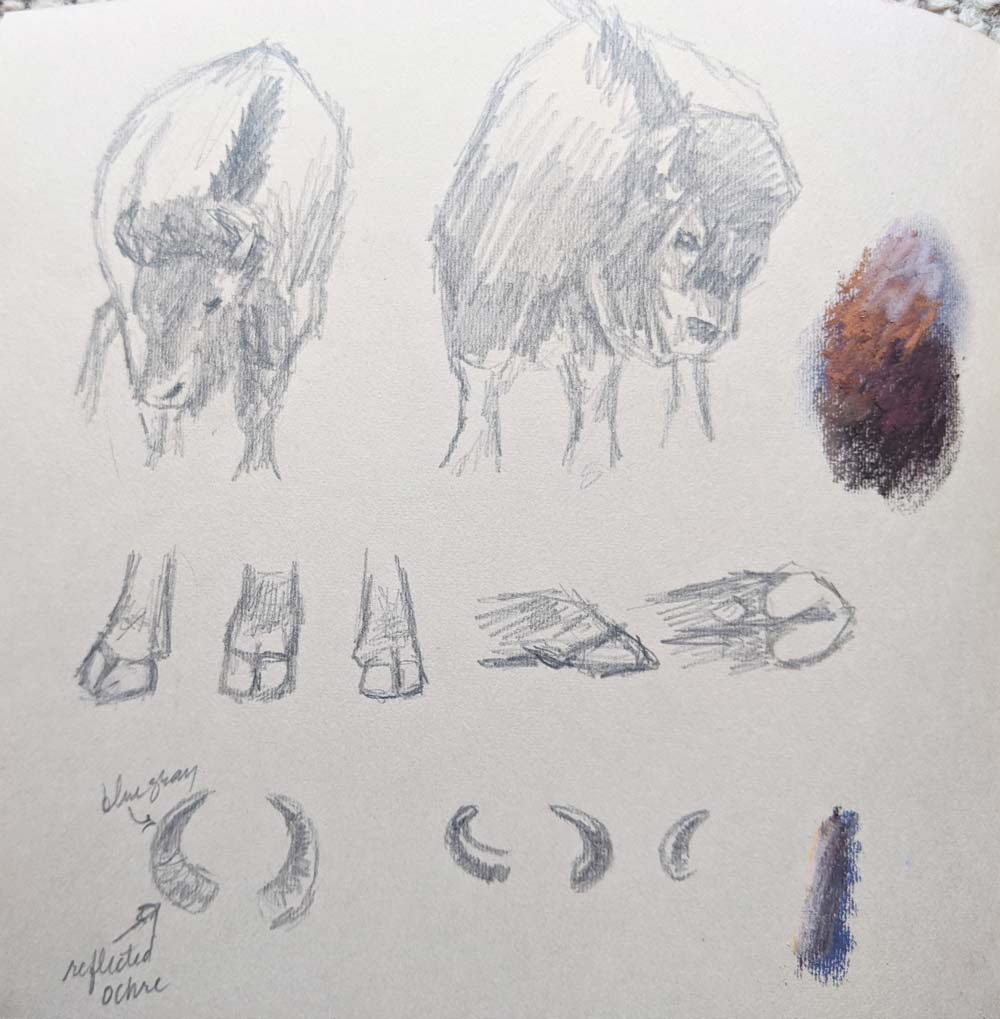
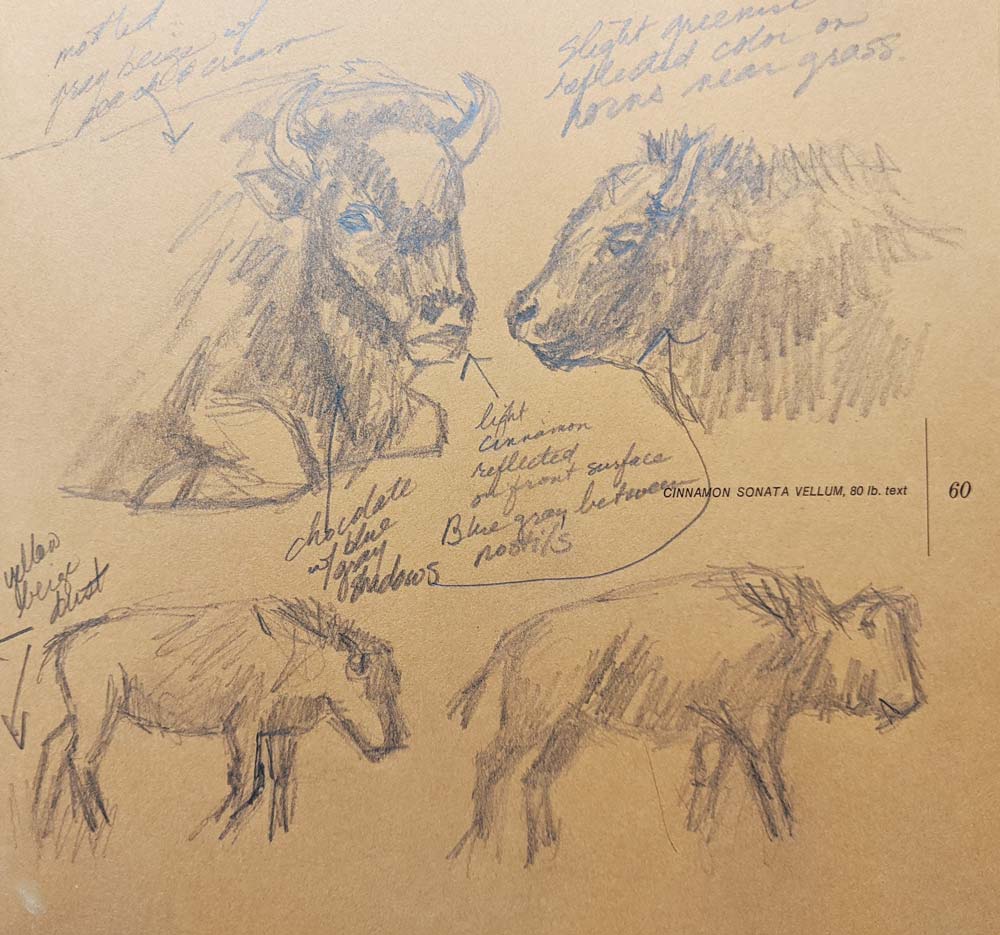
This type of environment was not conducive to painting en plein air. But any information that I could gather beyond a photo would enhance the painting process.
Back in my studio and working from the photo as inspiration, I created a thumbnail design of the scene that I envisioned. This included removing background elements to simplify the scene, adding a sense of wind and moving the light source to the left to allow for shadow patterns against which I could incorporate a swirl of dust.

Whether the subject is a landscape, animal, still life or portrait, supplementing reference photos with sketches and color notes from life can offer many advantages. Sketching strengthens one’s drawing and drafting skills. Observing from real life improves abilities to distinguish subtleties in values, hues and color temperature. It helps fill in the blanks left by photos and can lead to a much stronger painting.
It’s not about “either/or.” It’s about making the best use of the tools that we have available.
You can visit Tracey’s website at www.traceymaras.com.




5 comments
Pamela Lang
Thank you Unison for putting artist on this website. Even if you learn one tip they all add up. I love your pastels, wish I could find the right paper.
Ingrid
Hi Pamela, so you could take pastelmat of Clairefontaine, it is a sanded paper (if you like, look at Youtube / Marla Baggetta, she is a pastellist, shows a lot of Demos in pastel; and I got the hint from he)r. And from Tobi Clement, US-PastelJournal 7-8/2020 : She tested several sanded papers and this one kept the most pastel layers.
Tracey Maras
Pamela – Regarding finding the right paper, it all depends on what you are trying to achieve. There are pros and cons to all of the different types of paper. Some are more economical, but may not hold much pastel or be as versatile. Pastel papers that have a “grit” surface will tend to be more expensive but they are more durable and versatile. Commonly, the grit/sanded papers may not be available locally to an artist, requiring that they be ordered. One of the best ways to find a paper that you like is to purchase a Sampler Set of papers. These typically are available through art supply companies that carry pastel materials.
Sandra Thorpe
Very helpful details. Thank you.
Tracey Maras
Thank you Sandra.