
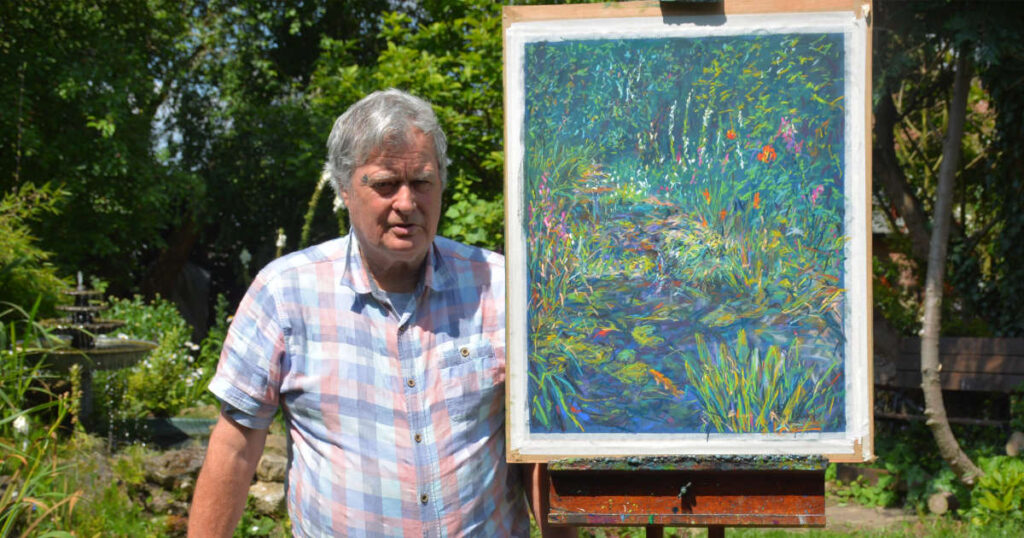
I have often likened painting to music with its high notes and bright colours, deep bass notes like deep rich, dark colours and tinkling bells for a splatter of light. Also cooking where smells, tastes, and colours can also be composed into a complete work? Perhaps gardening can also be likened to painting and as an art. Composing colours, shapes, textures, smells, hues and so many of the same things?
In this case I wish to talk about creating your own garden to paint in, as I have been doing both here and abroad. Strangely enough one of those being near to Fresselines in the Creuse where the famous Impressionist painter Claud Monet once painted. Who better to mention than this artist famous for creating his gardens in Giverny to paint within?
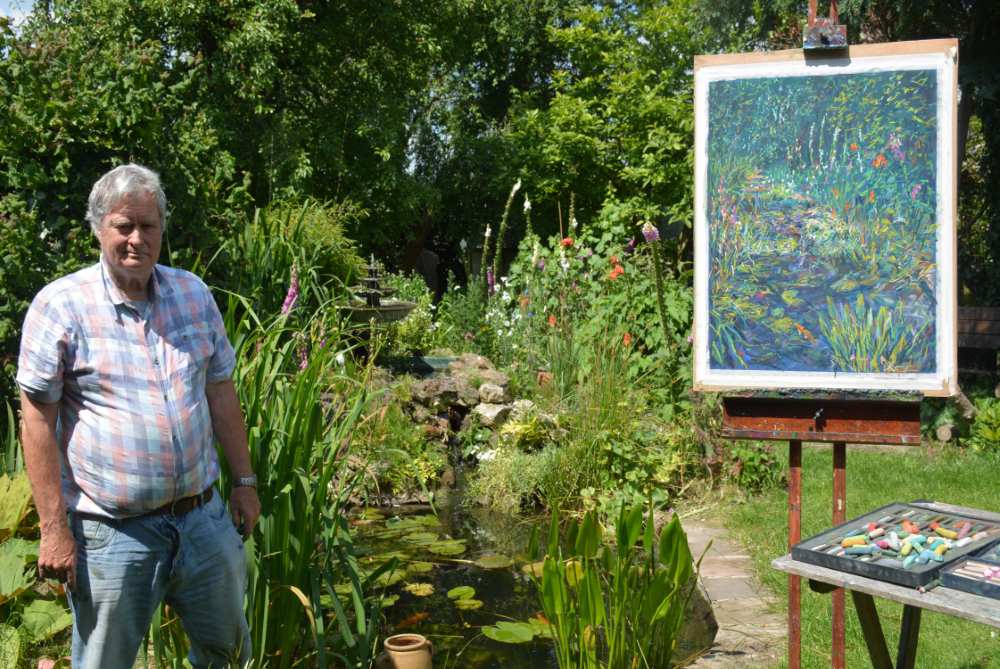
My latest gardens are in the Lincolnshire village of Bonby. When we moved here, about eight years ago, there were some established trees, shrubs and two small ground elder infested flower beds, plus a small leaky pond. All overshadowed by a huge border of towering fir trees. The main part of the house is 18th century, and as I love old English gardens and perennials such as Delphiniums, Foxgloves, Lupins, Hollyhocks and giant daisies I decided to work within this framework, renew the pond, create three raised vegetable beds, two greenhouses and plant further fruit trees.
The house is aptly named “Rose Cottage” as it has several well-established climbing roses each side and within the trees. I also wished to inject some of my Mediterranean and French past into the garden by adding small palms, olive trees, fig trees, grape vines and the large glass tear drop wine bottles and stoneware pots brought back with me when I left France. These play well against the existing “topiary” box hedges at the front.
The idea was to create a plethora of “compositions” to paint from nearly every view within spring to autumn. I had good, early, inspiration from having been fortunate enough to have 6 years of July as an artist in residence at Burton Agnes Hall near Bridlington. The gardens having been designed and created Mrs Cunliffe-Lister, a wonderful and hugely talented lady who helped many artists with her kindness. My garden here is not nearly so grand, but due to my age and health it is quite large enough and the design, also, has to be easily maintained.
What things to consider when creating a garden to paint in?
- Where does the light and sun travel through the day.
- Ease of access to gardens, views and painting.
- Placing of tall and shorter flowers.
- Beds framed by surrounding trees and textures.
- What colours, textures, shapes set each other off and will be available progressively through the seasons.
- Using the vegetable beds as a part of this whole deign and being aware of shapes and textures of these plants. E.g. Artichokes, runner beans up sticks, marrows and their lovely flowers and big leaves.
- Playing the smallest plants to their best advantage, (rockery plants, ferns, alpines, around the pond and waterfall) next to plants increasing in size from Marigolds to red hot poker, Fuchsias, trailing plants such as nasturtiums (many of these plants have the added advantage of self-seeding for the next year), broader leaf plants such as Hosta’s, gradually working up to taller plants in the background. Then the shrubs and trees, the trunks and branches of which add to the background pattens and shadows. It is longer term than a painting and constantly changing within each area through the seasons. One can also plant, change and replace whenever one likes.
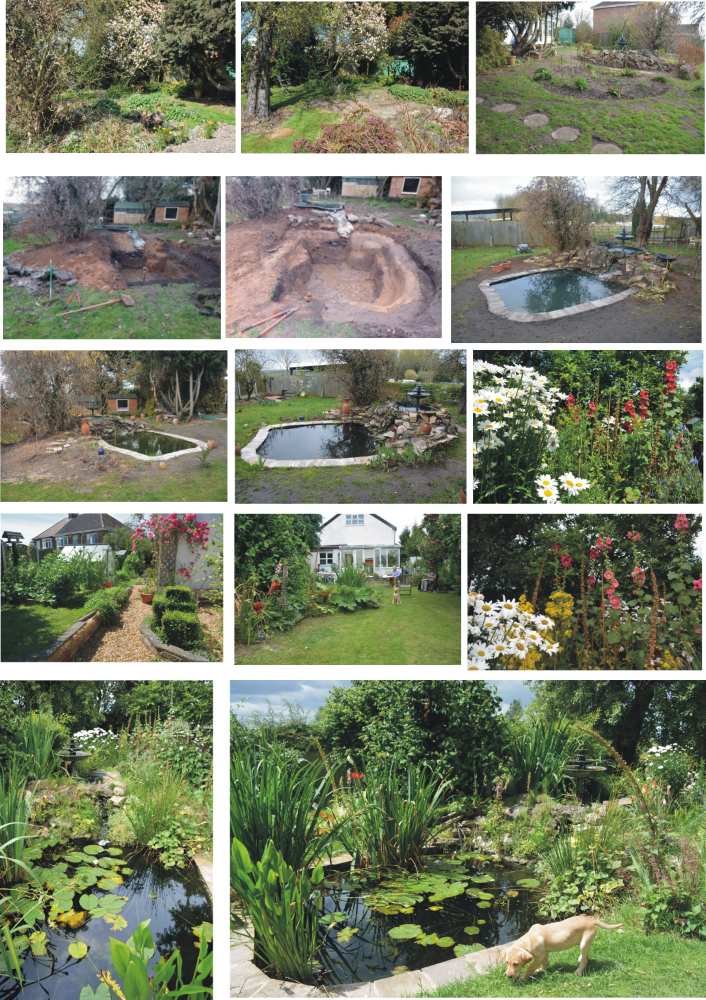
The fishpond may well become a central area very important to the whole design, as with mine, as it fits within the pre-existing garden framework. I have a raised filter pond with a cascading fountain that circulates down a waterfall into the main lower pond. Different stepped shelves are built into the sides to allow marginal plants, rushes, Kingcups and water lilies to establish.
Once again you need to be aware of the size and heights these plants will grow. Clearly your garden can and should be a wildlife attractor and haven. You may decide to add smaller ponds for water irises and frogs, Buddleia and insect attracting flowers and shrubs.
Make “secret” hideaways within your design, even in a small garden, screens can be created by taller flowers or even bamboo. Place garden benches carefully where you feel some of the best views are. Thinking and planning well ahead is vital, not simply for colour but also where plants will do best. Some experimenting will be required, will Rhododendrons do well, or is it too dry, will they outgrow the spot, the same with Pampas grass, is it better to plant three colours together rather than one, and so on?
Do you want a “wild area” a little patch sown with meadow flowers, poppies etc. or a tall lilies bed. Even an area for sunflowers or a line at the back of the raised vegetable beds?
Larger leafed plants can be used to make a jungle area. I have done this one side of my pond using Gunnera and giant Hosta with Iris and taller plants behind backed by a twisted Hazel tree.
Thus, from spring bulbs, Daffodils, snowdrops and primroses in the spring you can move into Irises and through a plethora of seasonal plants developing every month. Bear in mind the use of troughs and pots, also. For standard trees, small fruit trees and herbs can be very attractive in troughs.
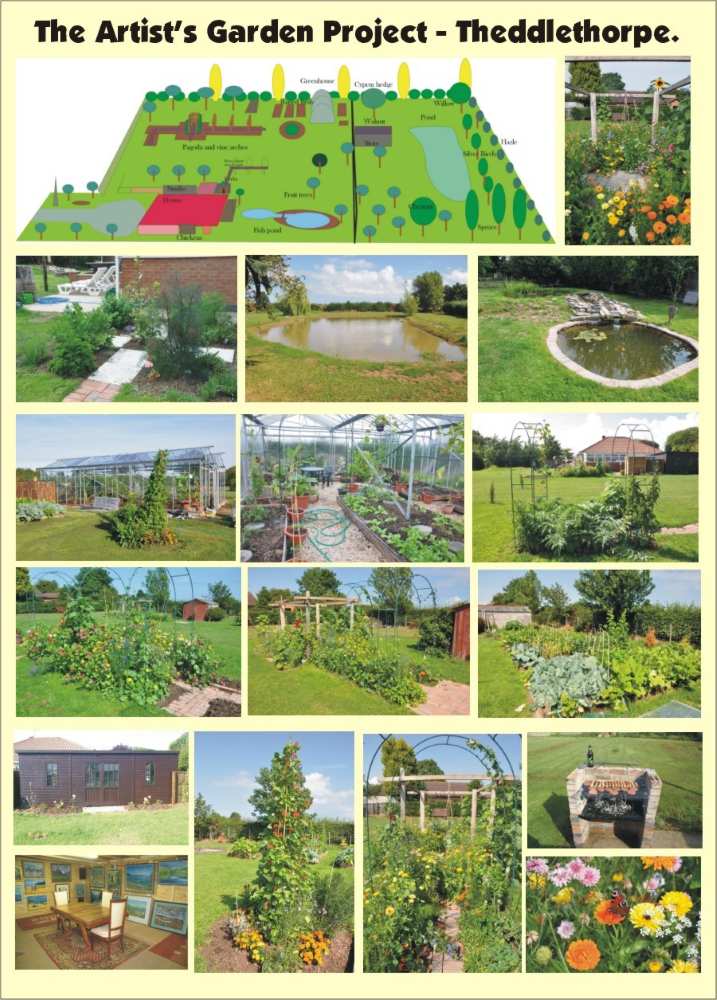
Of course, greenhouses are a great asset and in a previous, larger, garden I was fortunate enough to purchase and have a massive ex-commercial greenhouse built, and grow banana trees, peaches, large grape vines, passion flowers, ferns and huge lilies. A large conservatory may also offer you a chance to have exotic plants such as “bird of paradise”, monstera, even Taro and the multitude of broad-leaved potted plants and palms that can also be taken outside and placed in strategic positions in your garden in summer?
Then we eventually come to painting?
Hopefully you will have already decided, when planting, what inspires you, such as Opium poppies next to big daisies, and some ice blue Delphiniums behind? Possibly go around with a camera as things develop to better visualise a composition.
Do remember how different the same scene may seem as the light changes through a day, or how much better it is in sunlight? Use your hands to make a frame and view through or cut a card frame? Look at coming closer to a foreground plant and then having another recede behind, you may prefer close ups or a lot of detail further back?
Think about what you are painting about, the textures, the light, the mood, the colours, tones, shapes or simply just be inspired and enjoy the moment?! The method and medium may be inspired by that alone. Linear work or tonal work, textural work or impasto colours?
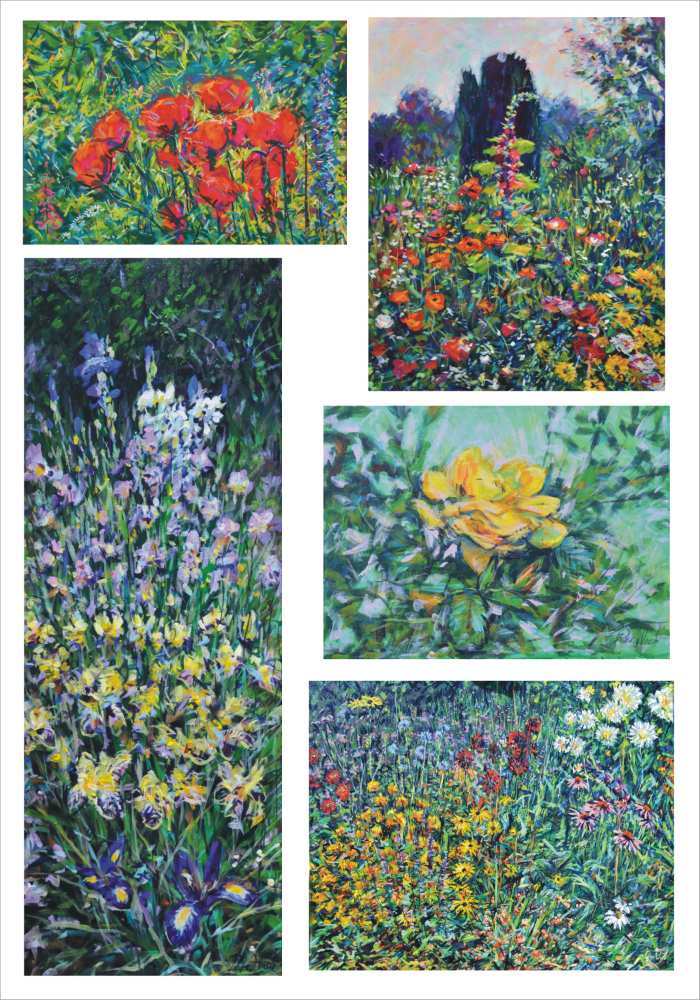
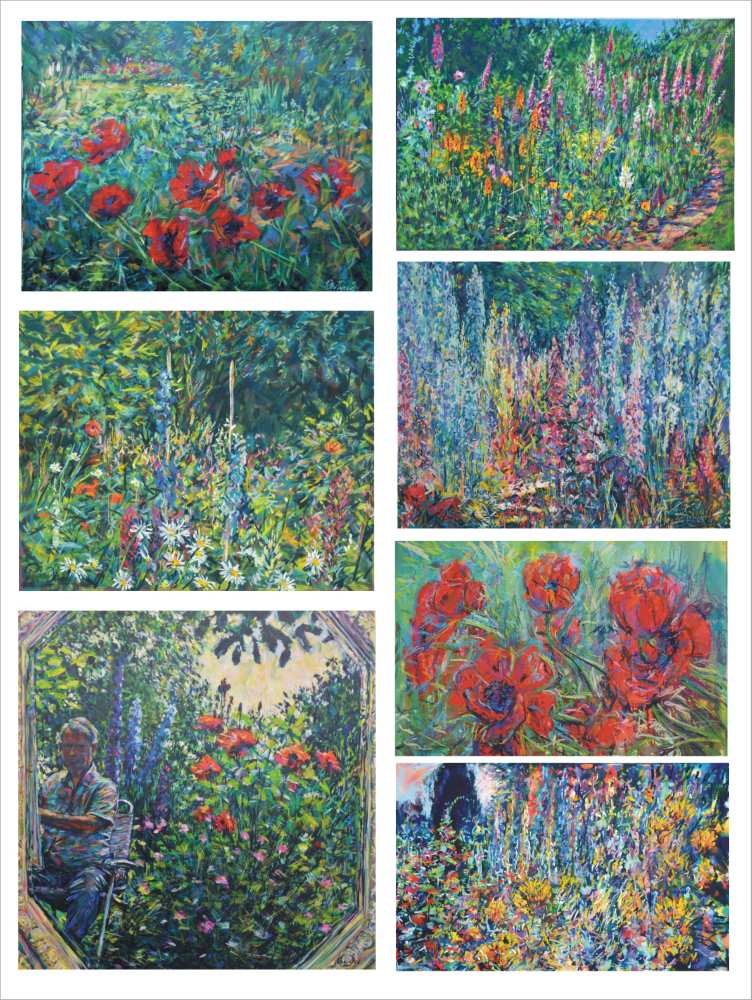
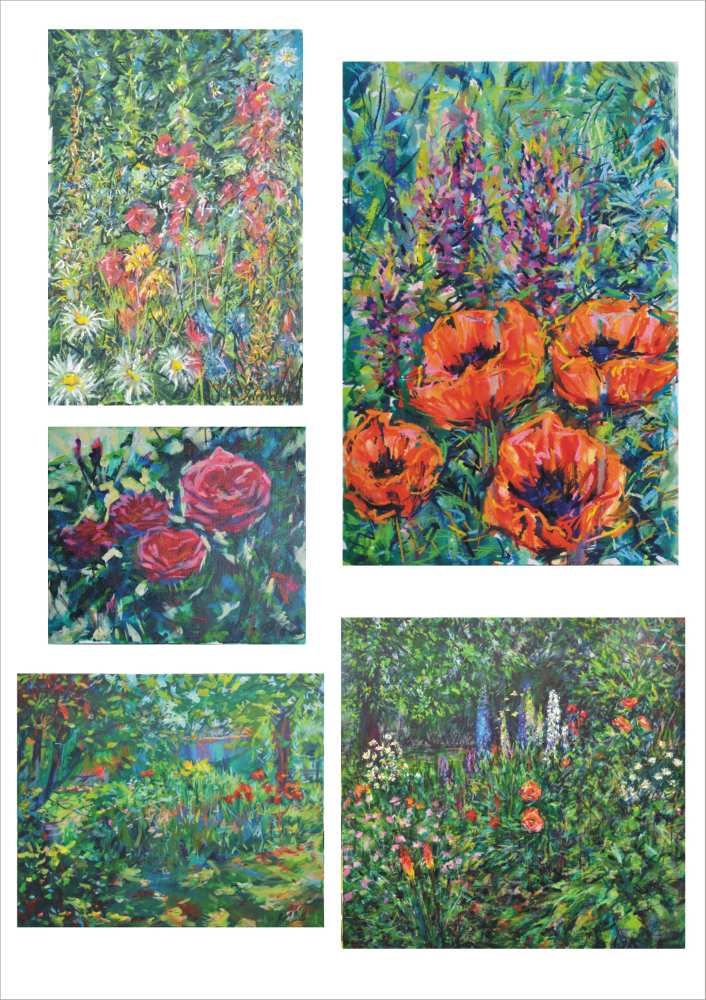
Pastel Paper
Choosing the best paper and surface will also be denoted by this.
You may wish to do a very fluid effect of light using water and pastels on watercolour paper or with acrylic inks and pastels or a very direct impasto work with Pastelmat paper. Possibly use the old English method of block and blend on Ingres paper. So many ways to enjoy.
At the end are a few films showing how my present, smaller, garden, pond and past big greenhouse were built. There are many more on my YouTube channel showing paintings being produced and even visits to other gardens here and abroad.
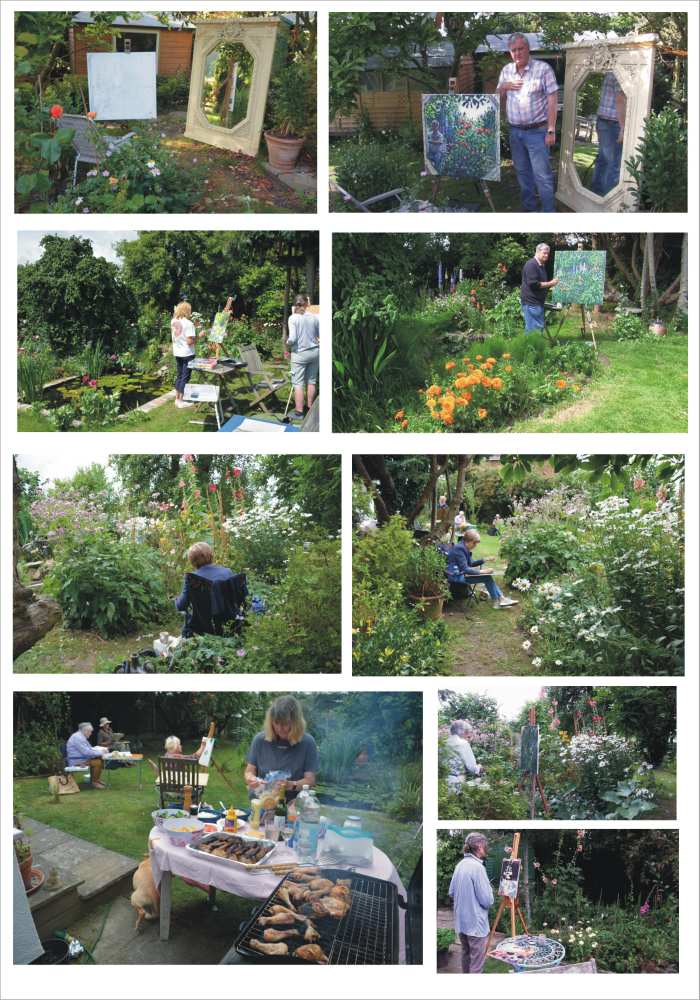
A few other ideas I have used are organising a model to pose within your garden, and using a very large mirror set up within the flower beds to paint a self-portrait.
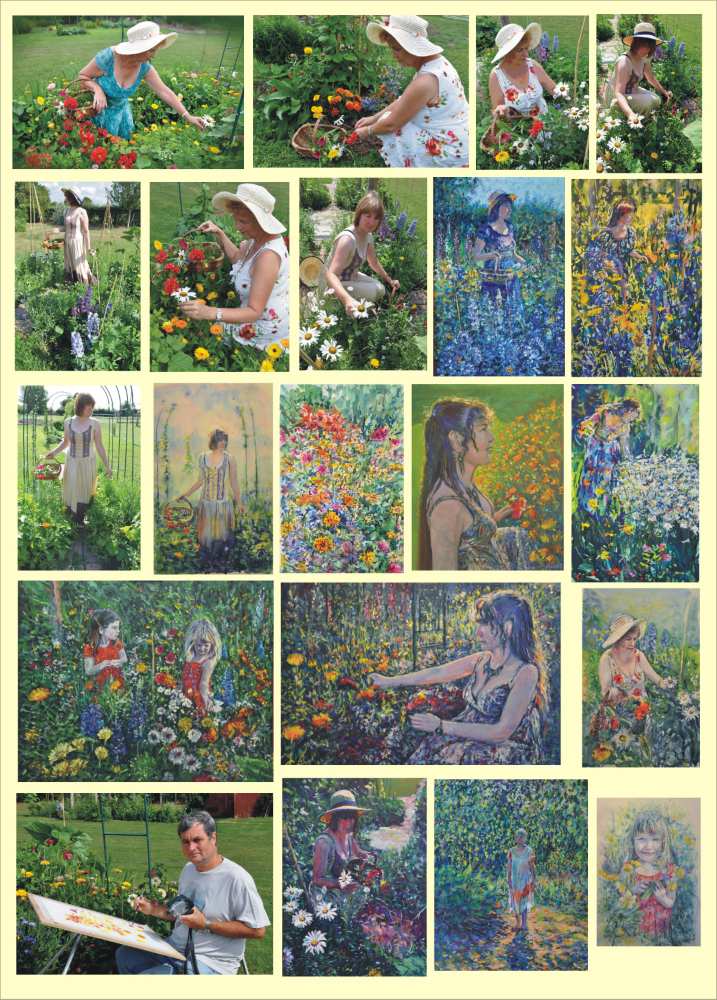
My garden is open to visits from individuals and groups to paint, in summer, by appointment. There is also a new gallery and studios being completed that may allow residential stays and themed seasonal painting breaks for individual or couples.
More of my YouTube videos…
- Building a waterfall, fountain and ornamental fishpond step by step
- Autumn 2024 Vlog 4 – Rose Cottage gardens August 24th
- Giant poppies in my French garden using acrylic inks and soft pastels
- Giant poppies en pleine air
- Previous larger gardens and commercial greenhouse
- Starting the creation of the larger gardens
- The gardens at Theddlethorpe
- Priory of Orsan – France
- Hollyhocks in an English country garden – Pastel and water

1 comment
sheltondarran
Hi Peter, thanks for a great blog and so nice to see your wonderful work and garden project. I grow a lot of flowers in my garden and I just so happen to have an unopened box of soft pastels and untouched pastel paper I bought several years ago (shockingly bad artist behaviour, I know, but pastels are not my usual medium!) so maybe this summer I’ll get all colourfully dusty and see what develops. Thanks for the inspiration Peter!
Best wishes
Darran