As artists, we’re always learning. The journey never really stops – there’s always something new to explore, refine, or discover. One powerful technique that has helped me (and many others) grow is creating master copies.
You might be wondering, Why paint a master copy? Isn’t that just copying?
Well… yes and no.
The goal of a master copy isn’t to replicate every brushstroke perfectly.
It’s to study and understand how a great artist used their materials – what colour choices they made, how they handled composition, and what kind of marks brought the painting to life.
With the reference already decided, you’re free to focus on the how rather than the what.
This makes it easier to observe the subtleties: how the colour was applied, how edges are lost or found, or why a certain shape just works.
Sometimes it’s the marks themselves that create the composition – think Van Gogh’s directional strokes or Monet’s fascination with pure colour.
These insights are gold.
They help shape our own style and deepen our understanding of how to make an artwork “work.”
Master copies also hone specific skills: colour mixing, drawing accuracy, tonal values.
All incredibly useful – especially in pastel, where there’s less room for major corrections!
But what if the original painting was done in a completely different medium?
Take John Singer Sargent’s Girl Fishing – an atmospheric oil painting that caught my eye. I work in pastels, so the question was: Can I still do a master copy in pastel?
Absolutely!
If you’re interested in the application of paint, then yes, sticking to the original medium might be important.
But if you’re exploring colour palettes, composition, or the overall feel of a piece, the medium doesn’t matter as much.
Those lessons translate beautifully.
Here’s how I approached my pastel version of Girl Fishing:
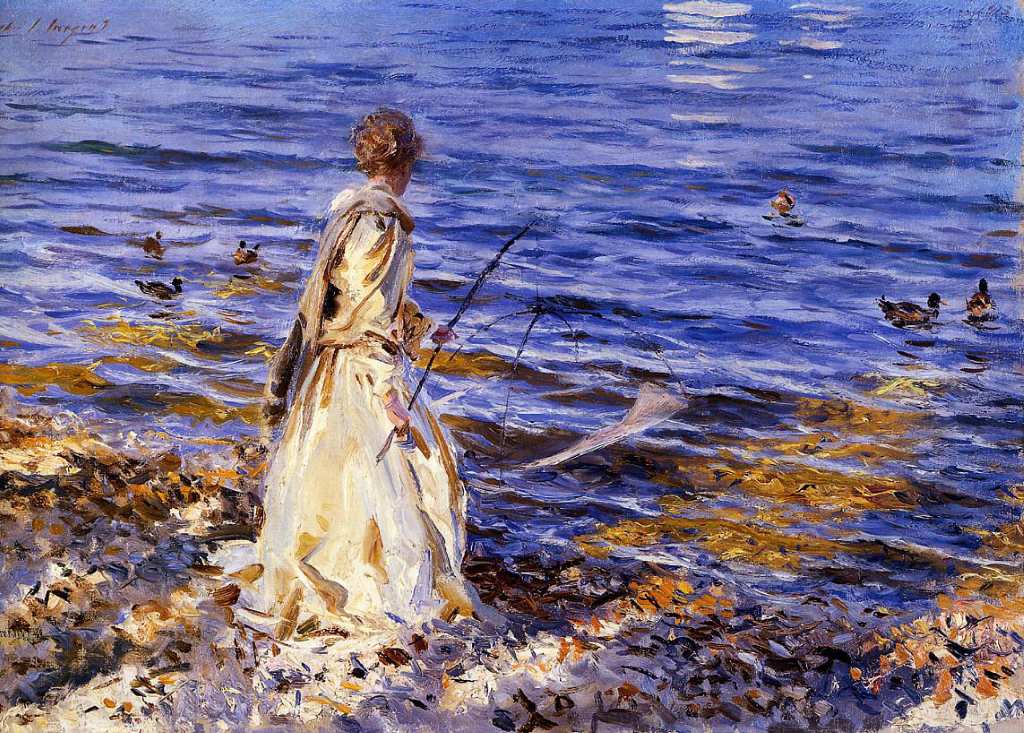
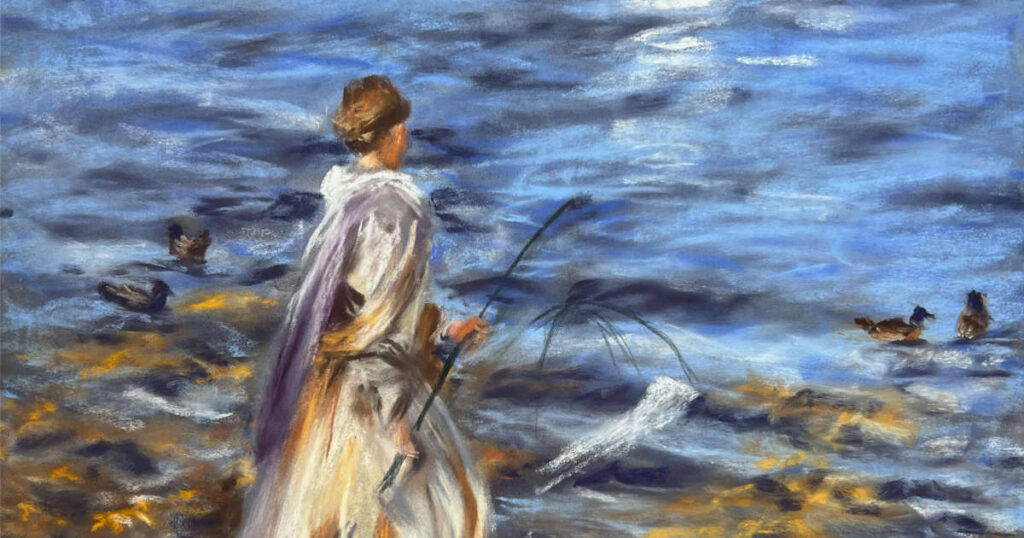
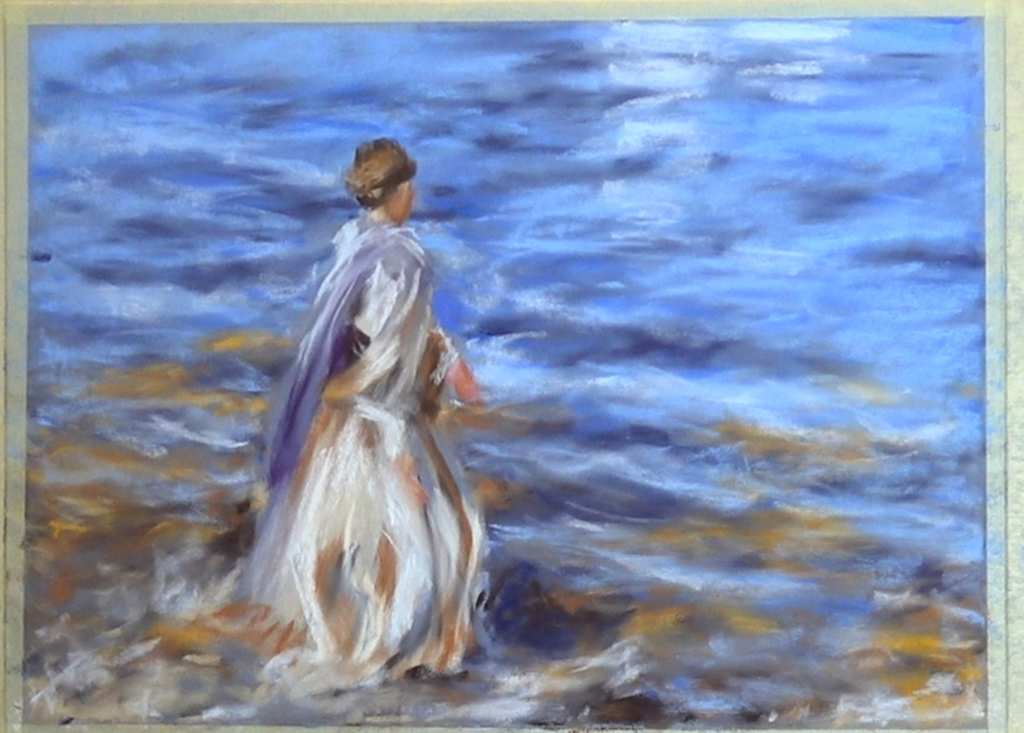
I was drawn to the interplay of colour – the way the yellows of the sand and the blues of the water created two distinct palettes. I loved the composition, especially the way the girl’s dress dissolves into the water with lost edges. That sense of softness and atmosphere really spoke to me.
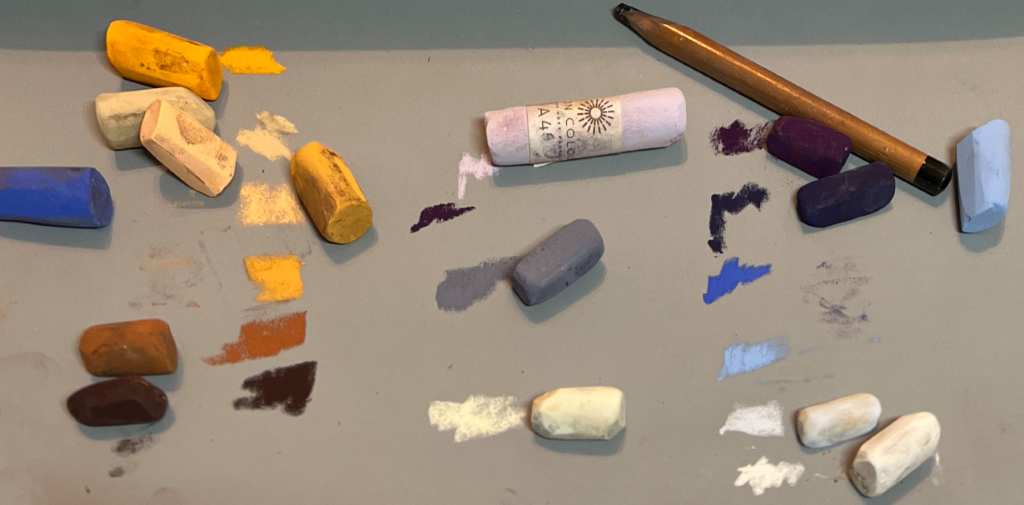
I chose a pale blue Pastelmat paper to act as a helpful mid-tone base, then carefully selected my palette: a range of blues and browns, with yellow ochre as the warm light, grey and purple for shadow, pale blue for cool highlights, cream for warm highlights, and a pop of bright yellow.
For the finer details, I added white, black, and sepia pastel pencils.
Testing these colours against the reference before starting saved me a lot of second-guessing later – being prepared is half the battle!
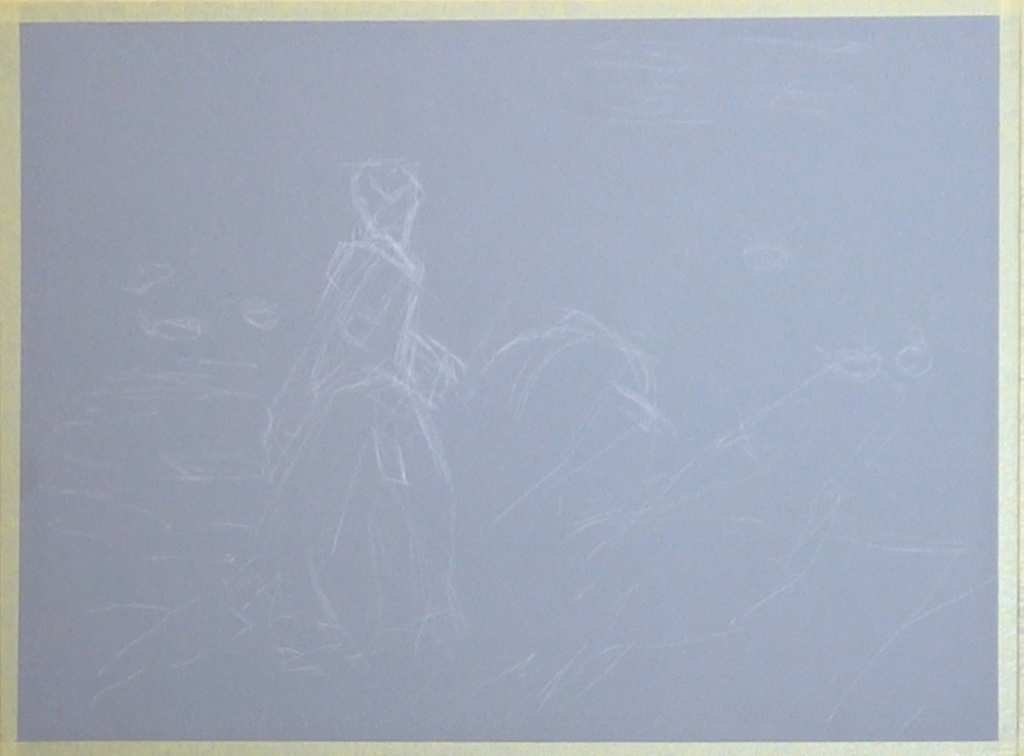
I started with a loose sketch, paying close attention to the structure of the composition – roughly two-thirds water, one-third beach, with the girl placed off-centre.
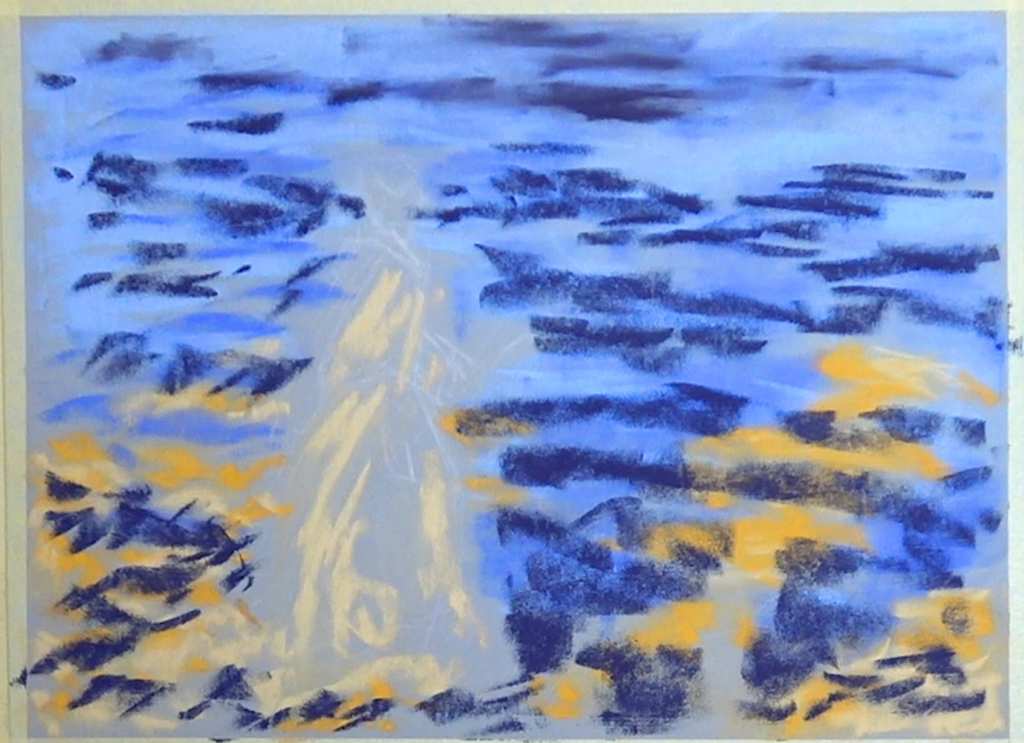
I then blocked in the water.
One thing I love about pastels is that, like oils, you can work from dark to light.
It’s important to be mindful of values early on – overworking can muddy the colours in either medium.
The painting is built from back to front, using blending tools and stumps to mimic the brush-like textures of the original.
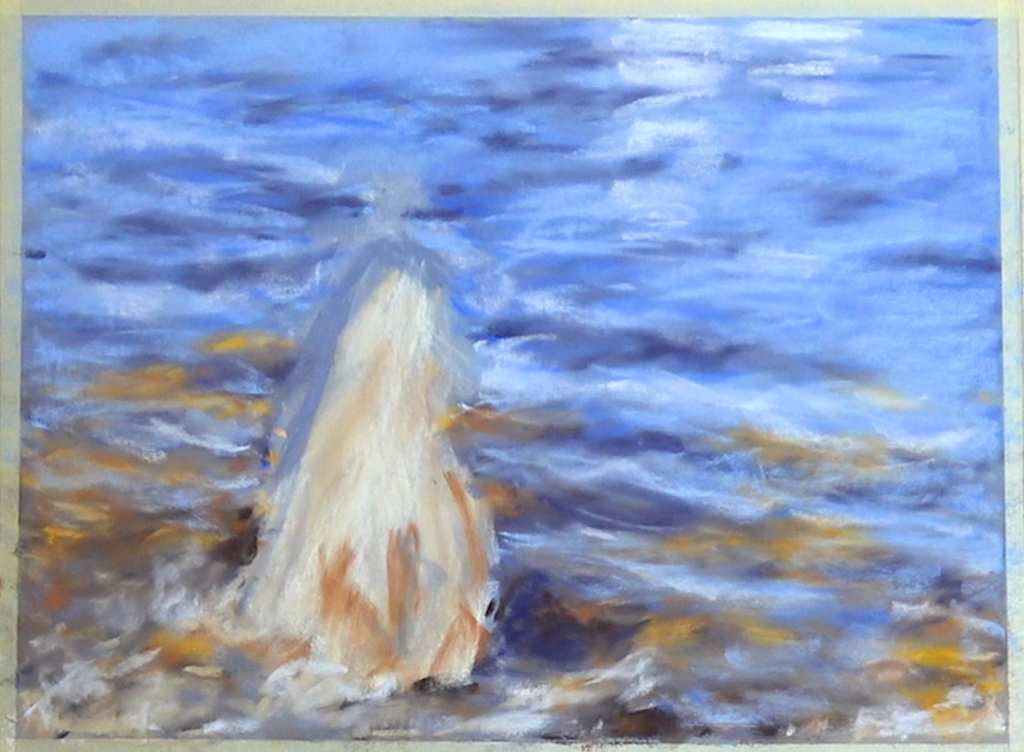
Of course, pastels have their own character, and that’s where a master copy becomes your interpretation.
It’s a balance of learning from the original while allowing your own hand to show through.
One of the joys of working from a master painting is realising how little detail is actually there. In Sargent’s original, the girl is beautifully loose and gestural.
A reminder that we don’t need to spell everything out.
In fact, when working from a photo, we often add more detail than we’d actually perceive in real life, the camera has a much better eye then us!
When working from life, we sometimes try to cram a whole vista into a single composition.
Less really is more.
That said, the final part of any painting are those finishing details and a review of your contrasts, especially when using pastels as blending will mute the tones.
Therefore a final review is always a good idea – especially after a nice cup of tea.
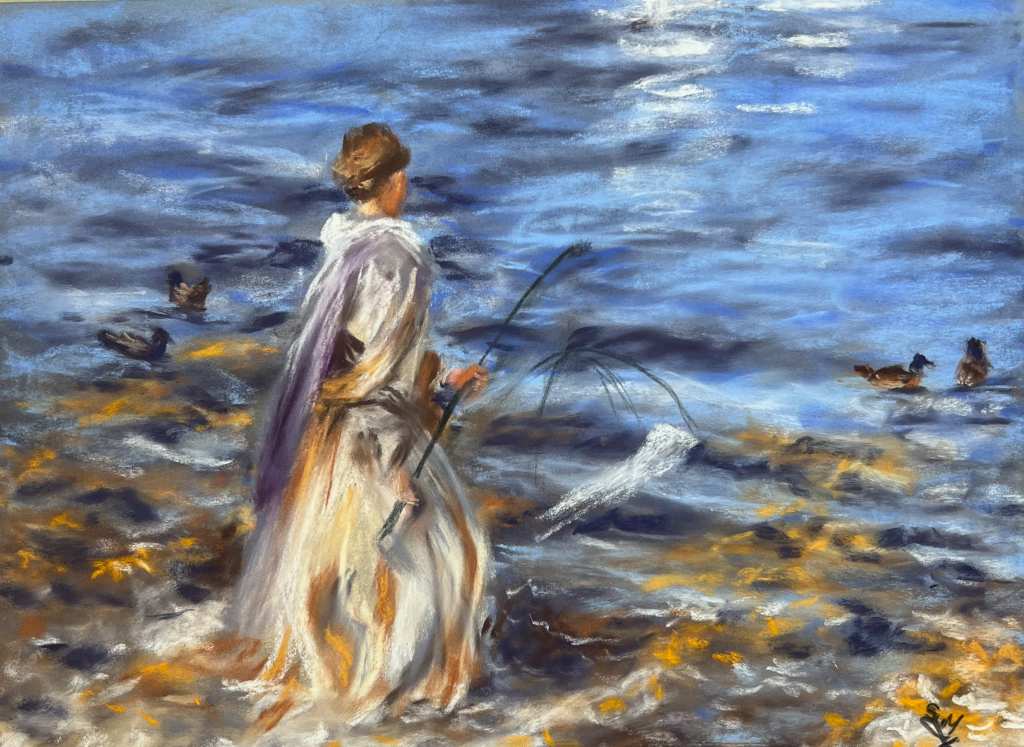
If you’re interested in seeing how this pastel version came together step by step, you can find the full tutorial inside the SMArt Art Academy.