
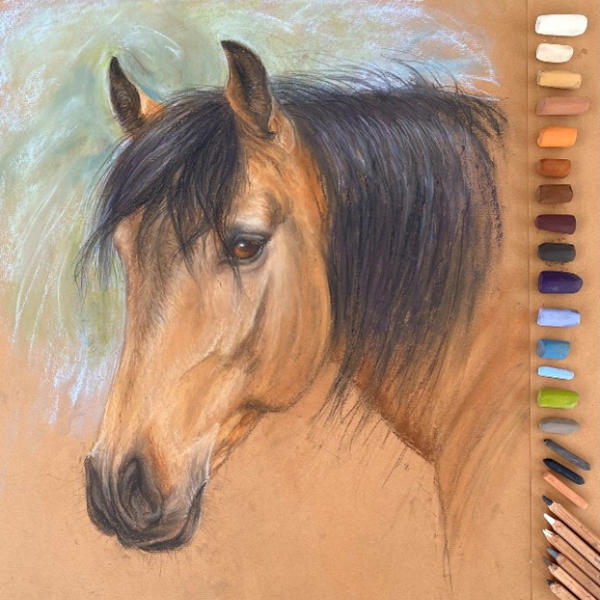
A video pastel workshop, to sketch a horse’s head in pastels.
Rebecca will take you step by step through her process to capture the form, textures and beautiful colours of this buckskin horse.
Includes Materials and Pastel Paper advice, Reference Images and 2 hours of detailed video tuition.
The Pastels
- Willow charcoal
- Soft Pastels
- Pastel Pencils
- Conte Crayons (not essential)
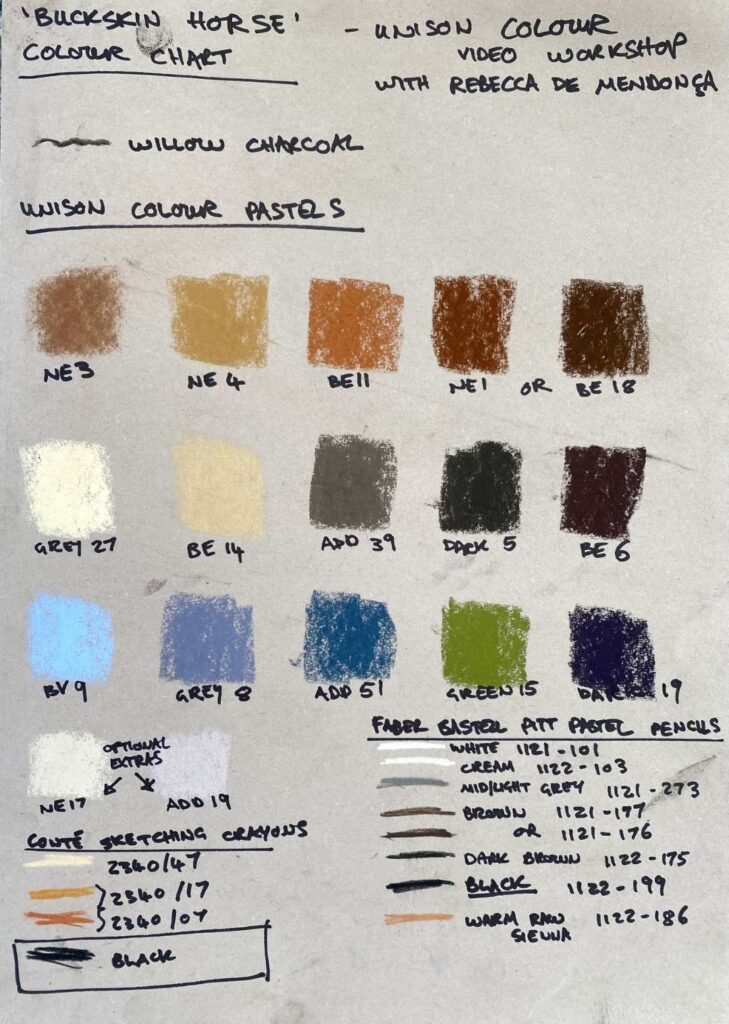
Unison Colour Soft Pastels
You do not need to use these exact colours, but it will help to have ones as close as possible.
- Natural Earth 3
- Natural Earth 4
- Brown Earth 11
- Natural Earth 1
- Brown Earth 18
- Grey 27 (cream)
- Brown Earth 14
- ADD 39
- Dark 5
- Brown Earth 6
- Blue Violet 9
- Grey 8
- ADD 51
- Green 15
- Dark 19
Conte Crayons
- Black is very useful
- 2340/17 or 2340/07 would be useful but not essential
Pastel Pencils – Rebecca uses mostly Faber Castell Pitt Pastel Pencils
Either a black Conte crayon OR a black pastel pencil such as 1122-199
A white pastel pencil is also VERY useful. 1122-101
Other Pitt Pastel Pencils -
- Cream 1122-103
- Mid grey, such as 1121-233 or 273
- Brown, such as 1122-176 and/or 1122-177
- Dark Brown 1122-175
- Any raw sienna type colour such as 1122-186
Average Review Score:
★★★★★
You must log in and have started this tutorial to submit a review.
Tutorial Content
Reference Photos
You don't currently have access to this content
Video: Part 1
You don't currently have access to this content
Video: Part 2
You don't currently have access to this content
Video: Part 3
You don't currently have access to this content