
What do the ACMI seals on Unison Colour Soft Pastel packaging mean?
All of Unison Colour pastels are tested in a toxicological evaluation by Duke University (ACMI) in North America. They are then graded with either an AP or a CL warning label, these mean:
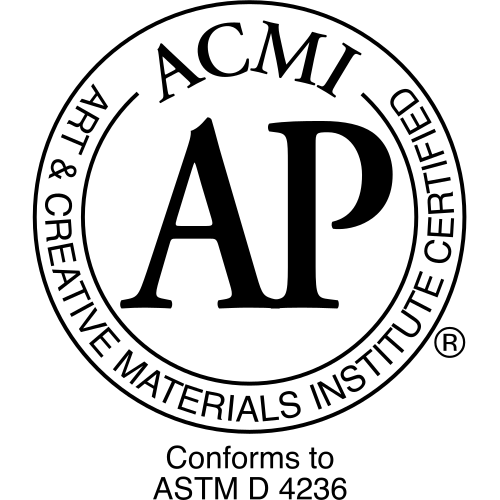
The AP Seal
Check for the AP Seal on creative products for kids in sixth grade or younger.
- Non-injurious to humans when used as intended
- For young children and adults who are physically or mentally disabled or don’t understand safety labeling on product packages
- Labeled according to the chronic hazard labeling standard, ASTM D 4236, and the U.S. Labeling of Hazardous Art Materials Act (LHAMA) and contain no materials in sufficient quantities to be toxic or injurious to humans, including children
- Do not cause acute or chronic health problems as defined by ASTM D4236, LHAMA, and the FHSA.
The AP Seal identifies art materials that are certified in a toxicological evaluation by a board certified toxicologist (medical expert) to contain no materials in sufficient quantities to be toxic or injurious to humans, including children, or to cause acute or chronic health problems. These products are certified by ACMI to be labeled in accordance with the chronic hazard labeling standard, ASTM D4236, the Federal Hazardous Substances Act (FHSA) including the U.S. Labeling of Hazardous Art Materials Act (LHAMA).
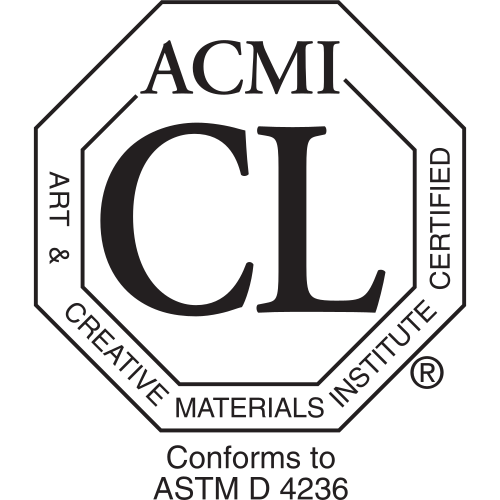
The CL Seal
Check for the CL Seal on creative products for kids in seventh grade or older. Never give children in sixth grade or younger a product with the CL Seal.
- For adults and kids older than sixth grade
- Not hazardous to humans when used as instructed
- Must read the product label in full before opening
- Labeled according to the chronic hazard labeling standard, ASTM D 4236, and the U.S. Labeling of Hazardous Art Materials Act (LHAMA)
- Appears on only a small percentage of adult art materials, and on no children’s materials
The CL Seal with cautionary labeling identifies products that are certified to be properly labeled in a program of toxicological evaluation by a board certified toxicologist (medical expert) for any known health risks and with information on the proper use of these materials. These products are also certified by ACMI to be labeled in accordance with the chronic hazard labeling standard, ASTM D4236, the Federal Hazardous Substances Act (FHSA) including the U.S. Labeling of Hazardous Art Materials Act (LHAMA). These products should never be given to children in grade 6 or lower, or anyone who for any reason is unable to read, understand or implement safety labeling and instructions.
We recommend when specifying or purchasing art materials, particularly for institutional use, that you carefully consider the ultimate consumer. In cases where products may be used by young children (K-6) or in environments with physically or mentally disabled persons who may be unable to read or understand safety labeling, you should specify and purchase materials which bear the ACMI AP (Approved Product) Seal.
Products which bear the ACMI CL (Cautionary Labeling) Seal can safely be used by those persons who are able to read, understand and follow suggested safety precautions for handling those materials.
For more information, please go to: www.acmiart.org/materials-safety
Advice on using Soft Pastels
Pastels by nature are a dusty medium and artists know that they need to take responsibility for their health when working with any medium. Those artists who have used pastels for a long time will have their own methods for keeping dust to a minimum.
At Unison Colour we would advise that:
- Keep formation of airborne dusts to a minimum
- Work in a space that is dedicated to your art and not where you would prepare food
- When cleaning your art space, use brooms and wet cloths/mops to collect the dust
- If you can afford to buy one, use an Air filter OR ensure you use pastels in well ventilated area
- When using pastels, do not eat, drink or smoke
- Wash hands thoroughly after handling
- During heavy usage or being up close to your painting, the wearing of a dust mask is recommended
- Protective latex or vinyl gloves are also recommended or you can use a barrier cream as an alternative.